
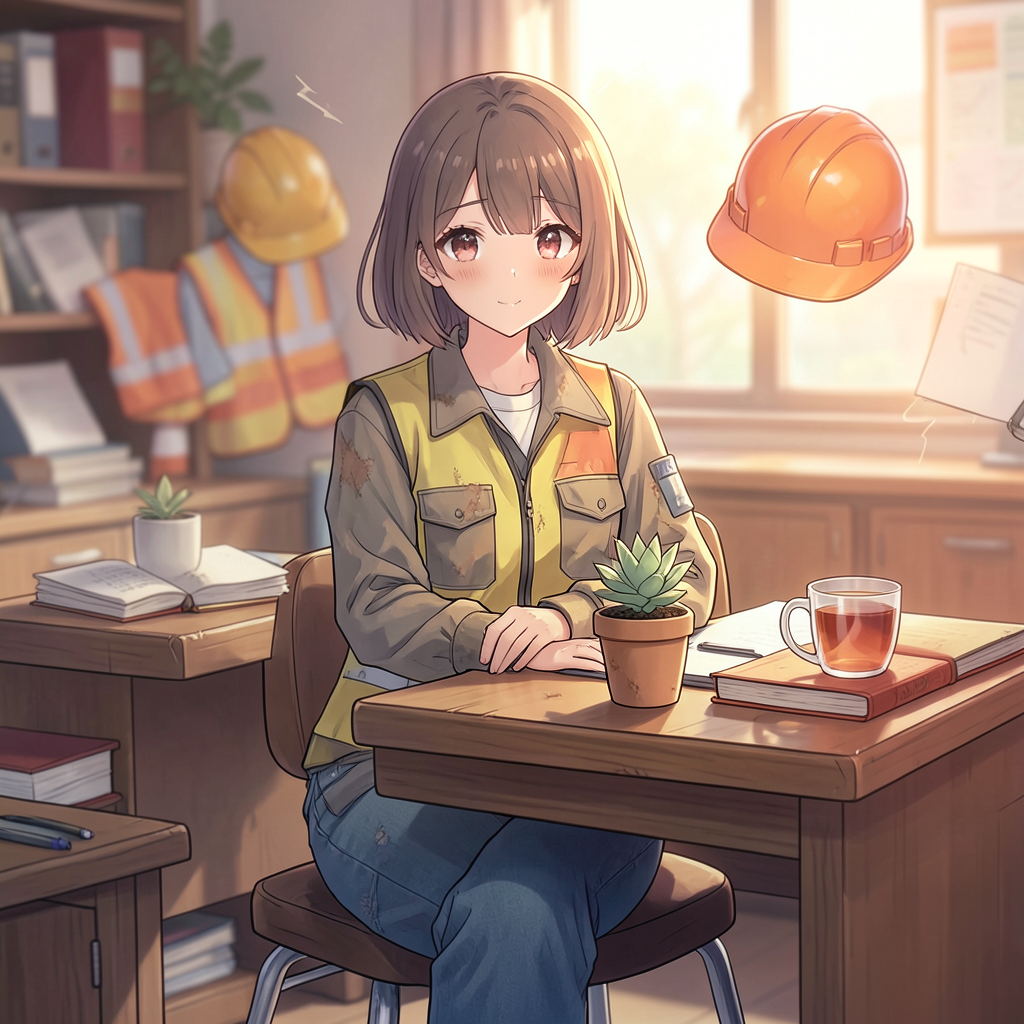
My First Month: Workplace Safety in Germany – It’s More Than Just Helmets
Okay, so things are… interesting. I’ve been working as a graphic designer for a small marketing agency in Munich for just over a month now, and let me tell you, the whole “workplace safety” thing is serious. It’s not just a quick chat before you start the day, like I thought it might be back home. Honestly, the first couple of weeks I felt a little overwhelmed, but I’m starting to get a handle on it, and I really wanted to share what I’ve learned, especially for anyone else feeling a bit lost.
The First Day – “Sicherheitsbelehrung” and a Lot of Questions
My first day, everything was a blur of introductions and paperwork. But then came the Sicherheitsbelehrung – the safety briefing. It was led by a guy named Herr Schmidt, and he went through everything in German, very quickly. I understood bits and pieces – “Brandratte” (fire extinguisher), “Notfall” (emergency), “Erste Hilfe” (first aid) – but I mostly just nodded and smiled, feeling completely clueless.
Later, my supervisor, Frau Müller, noticed I wasn’t taking notes. She said, “Ist etwas unklar?” (Is anything unclear?) and I confessed I was struggling. She was really patient. “Kein Problem,” she said. “Let’s go over it again.”
Key Phrases & Vocabulary – It’s All About the ‘Wie’ and ‘Was’
Here’s what I’ve picked up – phrases that are actually useful:
- “Wie geht es Ihnen mit der Sicherheit?” (How are you with safety?) – I use this a lot, even if I don’t fully understand the answer. It shows I’m engaged.
- “Ich verstehe nicht.” (I don’t understand.) – Seriously, don’t be afraid to say this. It’s far better than pretending you do.
- “Könnten Sie das bitte wiederholen?” (Could you please repeat that?) – Always a good one.
- “Was mache ich jetzt?” (What do I do now?) – Particularly helpful when I’m unsure about a procedure.
- “Gibt es eine Anleitung?” (Is there an instruction sheet?) – I always ask for this, especially for anything involving machinery.
I also learned a few essential words related to the office: Stuhl (chair), Schreibtisch (desk), Kabel (cable). And crucially, Geerdet (grounded) – you never know when you’ll be asked about electrical safety!
A Little Mishap (and a Valuable Lesson)
A couple of days ago, I was working on a new logo design and I moved a printer cable a bit, and without thinking, I just plugged it back in. Immediately, Herr Schmidt rushed over, saying in a very serious voice, “Was haben Sie da gemacht?!” (What did you do there?!).
It turned out the printer needed to be completely switched off and unplugged before moving the cable. He explained that it’s about preventing electrical shock. It was a huge moment – I realized this wasn’t about being careful; it was about following precisely laid-down rules. I apologized profusely, of course, and he calmed down, saying, “Es ist besser, vorsichtig zu sein” (It’s better to be careful).
Asking the Right Questions – “Warum?” and “Wie?”
I’ve started to notice that a lot of the safety procedures seem… arbitrary, at first. Like, why do we have to stand here for two minutes while the fire alarm goes off? Why is there a sign saying “Nicht stören” (Do not disturb) near the server room? Frau Müller patiently explained that the fire drill is for practice, and the sign is to prevent anyone from accidentally interrupting critical systems.
Learning to ask “Warum?” (Why?) and “Wie?” (How?) has been so helpful. It’s not just about understanding the rules; it’s about understanding the reason behind them.
Small Things Make a Big Difference
It’s not just about grand safety lectures. Even little things matter. Wearing the safety shoes ( Sicherheitsschuhe ), using the correct lifting techniques ( korrekte Hebehände – correct lifting hands), and taking regular breaks to stretch – all of it adds up.
I’m still learning, and I definitely make mistakes. But I’m committed to doing things the German way, and I’m finding that asking questions and showing a genuine interest in workplace safety is really appreciated. “Vielen Dank für Ihre Hilfe!” (Thank you for your help!) – I use that one a lot.
Anyone else finding this process challenging? Let me know in the comments!

Leave a Reply