
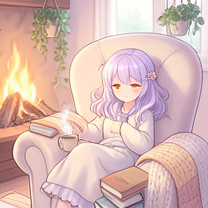
Schlaf und Erholung auf Deutsch: Mein Weg
Okay, so I’m still getting used to everything here in Berlin. It’s amazing, the city is incredible, but honestly, the biggest surprise has been how… different the whole concept of downtime is. I used to just collapse on the sofa after work, scrolling through my phone, and calling that “relaxing.” Here, it’s like, “Relaxing” has a whole different meaning. And a lot of it seems to be about Schlaf (sleep) and Erholung (recovery).
Das erste Gespräch: Der Arztbesuch
My first real need for this kind of language came with a doctor’s appointment. I’d been feeling absolutely exhausted – constant headaches, muscle aches, just… draining. I went to see a Hausarzt (general practitioner), Dr. Schmidt, and the conversation was a bit of a challenge.
I started, confidently, “Ich fühle mich total fertig!” (I feel totally finished!). Dr. Schmidt raised an eyebrow and said, “Und was machen Sie, um sich zu erholen?” (And what do you do to recover?)
I floundered. I didn’t realize I needed to actually talk about recovery! I blurted out, “Ich schlafe nicht genug!” (I don’t sleep enough!). He smiled and replied, “Das ist ein Anfang. Wie viele Stunden schlafen Sie normalerweise?” (That’s a start. How many hours do you normally sleep?)
I mumbled something about six hours, and he explained that for someone my age and level of stress, eight to nine hours was much better. He suggested trying a Schlafprotokoll (sleep diary) to track my sleep patterns. He even wrote down phrases like “Schlafqualität” (sleep quality) and “Schlafstörungen” (sleep disorders) – I felt completely overwhelmed! I realized I needed to learn more than just simple phrases.
Alltagssituationen: Gespräche mit Freunden
It’s not just with doctors. My German friends are far more intentional about their evenings. Last week, I was sitting with Lena and Max, and they were talking about their weekend plans.
Lena said, “Ich bin total fertig von der Arbeit. Ich brauche unbedingt eine Auszeit!” (I’m totally exhausted from work. I really need some time off!)
Max responded, “Dann machen wir ein entspanntes Abendessen.” (Then we’ll have a relaxed evening meal.)
I asked, “Was machen Sie denn so am Abend, um sich zu entspannen?” (What do you do in the evenings to relax?)
Lena explained, “Ich lese ein Buch, trinke einen Tee und gehe früh ins Bett.” (I read a book, drink tea, and go to bed early.)
Max added, “Ich gehe oft mit meinem Hund spazieren, das hilft mir, runterzukommen.” (I often go for a walk with my dog, it helps me to unwind.)
I realised the key word was runterkommen (to unwind) – I’d been trying to “relax” by just staring at my phone!
Wichtige Vokabeln (Important Vocabulary)
Here’s a list of words and phrases I’ve found really useful:
- Schlaf: Sleep
- Erholung: Recovery, relaxation
- Auszeit: Time off, break
- Entspanntes Abendessen: Relaxed evening meal
- R runterkommen: To unwind, to relax
- Schlafprotokoll: Sleep diary
- Schlafqualität: Sleep quality
- Schlafstörungen: Sleep disorders
- Früh ins Bett gehen: To go to bed early
- Ich brauche Schlaf! (Ich brauche Ruhe!) – I need sleep! (I need rest!)
Häufige Missverständnisse (Common Misunderstandings)
I made a classic mistake early on – assuming that “relaxing” always meant “sleeping.” I once said to a colleague, “Ich mache gerade eine Pause und schlafe ein bisschen.” (I’m just taking a break and falling asleep a little.) He looked utterly bewildered! Apparently, that’s not how things are done. You’re supposed to actively do something relaxing, not just… sleep!
Mein Plan für die Zukunft (My Plan for the Future)
I’m starting to realize that taking care of my Schlaf and Erholung is seriously important here. I’m going to try to follow Lena and Max’s example – a little reading, a walk with my dog (I’m thinking about getting one!), and definitely an earlier bedtime.
And most importantly, I’m going to actually talk about it. I’m even going to start using the Schlafprotokoll Dr. Schmidt recommended.
“Ich lerne Deutsch und ich lerne, wie man sich ausruht.” (I’m learning German and I’m learning how to rest). It’s a process, but I’m feeling more confident every day.
Wo kann ich mehr Hilfe finden? (Where can I find more help?)

Leave a Reply