
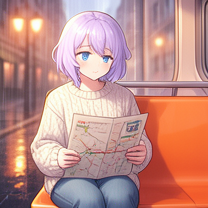
Navigating the U-Bahn: My First Forays into German Public Transport
Okay, so I’ve been here in Berlin for six months now, and honestly, the public transport is… an experience. It’s fantastic, it’s efficient, but at first, it was utterly overwhelming. I’d get on the U-Bahn (the subway) and just stare, completely lost. I knew I needed to learn how to talk about it, not just survive. This isn’t just about getting from A to B; it’s about feeling like I’m actually part of this city. Let me tell you about some of my early struggles and what I’ve learned.
The Initial Panic: Asking for Directions
The first time I needed help, I was completely frozen. I was standing on the platform at Alexanderplatz, trying to figure out which line went to Potsdamer Platz, and I approached a young man with a backpack. I blurted out, “Entschuldigung! Wo ist… Potsdamer Platz?” (Excuse me! Where is… Potsdamer Platz?). He looked at me with a slightly confused expression and said, “Potsdamer Platz? Die U-Bahn fährt nicht direkt dorthin.” (Potsdamer Platz? The U-Bahn doesn’t go directly there.) My face flushed. I hadn’t even considered that! I realized I hadn’t even asked how to get there, just where it was.
Key Phrases to Learn:
- “Entschuldigung!” – Excuse me! (Always start with this!)
- “Wo ist…?” – Where is…?
- “Die U-Bahn fährt nicht direkt dorthin.” – The U-Bahn doesn’t go directly there.
- “Können Sie mir helfen?” – Can you help me?
I quickly learned to add, “Können Sie mir bitte helfen?” (Can you please help me?) and then follow it up with my destination. It’s a much more polite and effective approach.
Buying a Ticket – A Comedy of Errors
Buying a ticket was another huge hurdle. The machines are intimidating! I tried to use the touchscreen, and I completely messed it up. I kept selecting the wrong options, and the machine would beep angrily. A kind older woman, Frau Schmidt, noticed my frustration and patiently explained, “Sie müssen zuerst die Fahrkarte auswählen und dann die Anzahl der Personen eingeben.” (You first need to select the ticket and then enter the number of people). I felt so stupid, but she was so lovely. I learned that there are different types of tickets – Tageskarte (day ticket), Wochenkarte (weekly ticket), and a ‘Komfortzone’ (comfort zone) which covers a wider area. Now I always double-check what I’m buying!
Useful Vocabulary:
- “Tageskarte” – Day ticket
- “Wochenkarte” – Weekly ticket
- “Komfortzone” – Comfort zone (zone of validity)
- “Wie viel kostet das?” – How much does that cost?
- “Ich möchte eine Tageskarte.” – I would like a day ticket.
Asking About Timetable Changes – “Ist die Bahn verspätet?”
This was a game-changer. I was waiting at U-Bahn Friedrichstraße, desperately hoping to catch a train to Hanover for a visit with family. I overheard a man talking to an information board and realized that’s where the answers were. I approached him and nervously asked, “Ist die Bahn verspätet?” (Is the train delayed?). He explained the delay in German, and I realized I needed to understand some basic timetable vocabulary.
Important Timetable Words:
- “Verspätet” – Delayed
- “Die nächste Bahn” – The next train
- “Wie lange dauert es?” – How long does it take?
- “Die Verbindung” – The connection / route
I also learned that Germans don’t just say “delayed”; they’ll give you a specific time. It’s always better to be prepared.
Small Talk on the U-Bahn – A Little Bit of Connection
Honestly, the biggest surprise was how people talk on the U-Bahn. There’s this little bit of small talk that happens, and I initially avoided it completely, mortified that I couldn’t contribute. But then I started saying “Guten Morgen” (Good morning) or “Guten Tag” (Good day) to the people around me. Someone even asked me where I was from – “Woher kommen Sie?” (Where are you from?). I said, “Ich bin aus [My country]” (I’m from [My country]), and they were incredibly friendly. It’s little moments like that that really help you feel settled.
Simple Greetings:
- “Guten Morgen” – Good morning
- “Guten Tag” – Good day
- “Woher kommen Sie?” – Where are you from?
My Biggest Lesson: Don’t Be Afraid to Make Mistakes
Looking back, my initial panic and awkwardness were totally normal. I made mistakes, I asked silly questions, and I definitely butchered the German language at times. But everyone I encountered was patient and helpful. The key thing I learned is not to be afraid of making mistakes. Germans generally appreciate the effort, even if your grammar isn’t perfect. It’s a huge part of learning a language, and this experience has been invaluable. Now, I still get a little flustered, but I can handle the U-Bahn – and that’s a huge win!
Now I’m aiming to learn more specific phrases related to journeys, like asking about platform changes or lost luggage. It’s a gradual process, but every time I successfully navigate the system, I feel a little more confident and a little more at home in Berlin.

Leave a Reply