
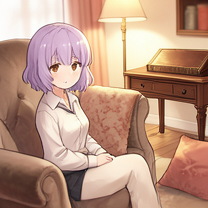
My First Furniture Fiasco: Learning German Through Wohnen
Okay, so here I am, six months in Berlin, and let me tell you, it’s amazing. The food, the culture, the history… incredible. But let’s be honest, settling in has been a process. And a big part of that process has been navigating the completely different way Germans think about their homes – Wohnen – it’s not just living, it’s a whole lifestyle. And a lot of it revolves around furniture and decoration. Honestly, I’ve learned more German from discussing sofas than I have from my German class!
The Initial Panic: “Die Küche?”
It started with a simple question. I’d just moved into a tiny apartment in Neukölln, and I needed to talk to my landlord, Herr Schmidt. I wanted to ask about the kitchen – die Küche. I really, really needed to know if the cooker hob was working. So, I blurted out, “Entschuldigung, Herr Schmidt, wie ist die Küche?” (Excuse me, Mr. Schmidt, how is the kitchen?).
He stared at me, completely bewildered. Then he said, slowly, “Die Küche? Sie meinen, wie ist der Zustand der Küche?” (The kitchen? You mean, what is the condition of the kitchen?). I realized I’d completely missed the point. I’d assumed “die Küche” automatically meant “is it broken?” Major facepalm moment. I quickly learned that asking simply “Wie ist die Küche?” is… confusing. It’s better to be specific.
Vocabulary for Wohnen: A Helpful Start
After that, I started actively learning the vocabulary. It’s surprisingly specific! Here are some phrases that have been essential:
- Der Tisch: (The table) – I’ve had to ask about the size of the dining table constantly!
- Die Lampe: (The lamp) – “Ist die Lampe voll funktionsfähig?” (Is the lamp fully functional?) – Much more polite and effective than my initial approach!
- Das Sofa: (The sofa) – This one’s tricky because ‘Sofa’ isn’t a common word here. People usually say “Das Polstersofa” (the upholstered sofa).
- Die Gardinen: (The curtains) – I asked Frau Müller next door if she could help me hang die Gardinen in my living room. She looked at me like I was crazy – apparently, everyone here hangs Jalousien (blinds)!
- Die Farbe: (The color) – Trying to describe the color of the walls was a nightmare! I’ve learned to just point and say, “Ich mag diese Farbe” (I like this color).
My First Shopping Trip: “Ich brauche ein neues Bett!”
A week later, I decided I desperately needed a new mattress. My old one was a disaster. I went to a Bettenfachgeschäft (bed shop) and started nervously trying to explain my needs. I wanted to say, “Ich brauche ein neues Bett!” (I need a new bed!), but I got completely lost.
The shopkeeper, a very friendly man named Klaus, kept asking, “Wie ist Ihr Schlaf?” (How is your sleep?) I panicked and just said, “Ich schlafe nicht gut” (I don’t sleep well). He then proceeded to show me a huge, firm mattress. It turned out he thought I wanted a sportliches Bett (sporty bed)! I quickly corrected myself, explaining I needed something comfortable. It was a chaotic, hilarious experience. He eventually pointed me to a great mattress – and I learned a valuable lesson: Be very clear!
Common Mistakes & How to Fix Them
Honestly, the biggest mistake I’ve made is trying to be overly formal. Germans value directness, but it can come across as rude if you’re too stiff. Also, asking “Ist es okay?” (Is it okay?) after every single sentence felt incredibly unnatural.
I’ve been working on phrasing things more directly, but politely. For example, instead of saying “Ich bin mir nicht sicher, ob das gut ist” (I’m not sure if that’s good), I’m learning to say “Das ist vielleicht nicht ideal” (That might not be ideal).
A Small Victory: Decorating My Fenster
Yesterday, I finally managed to say, “Ich möchte die Fenster mit Jalousien machen” (I would like to make the windows with blinds) to Frau Müller. And you know what? She actually helped me! It was a small thing, but it felt like a huge accomplishment.
Learning German through furniture and decoration has been a surprisingly effective way to improve my conversational skills. It’s given me practical vocabulary, exposed me to German cultural attitudes towards home, and, let’s be honest, it’s made living in Berlin a little bit more comfortable. Viel Glück (Good luck!) to anyone else trying to navigate this fascinating world of Wohnen!
Now, if you’ll excuse me, I’m going to go look at some Stühle (chairs) online.

Leave a Reply