
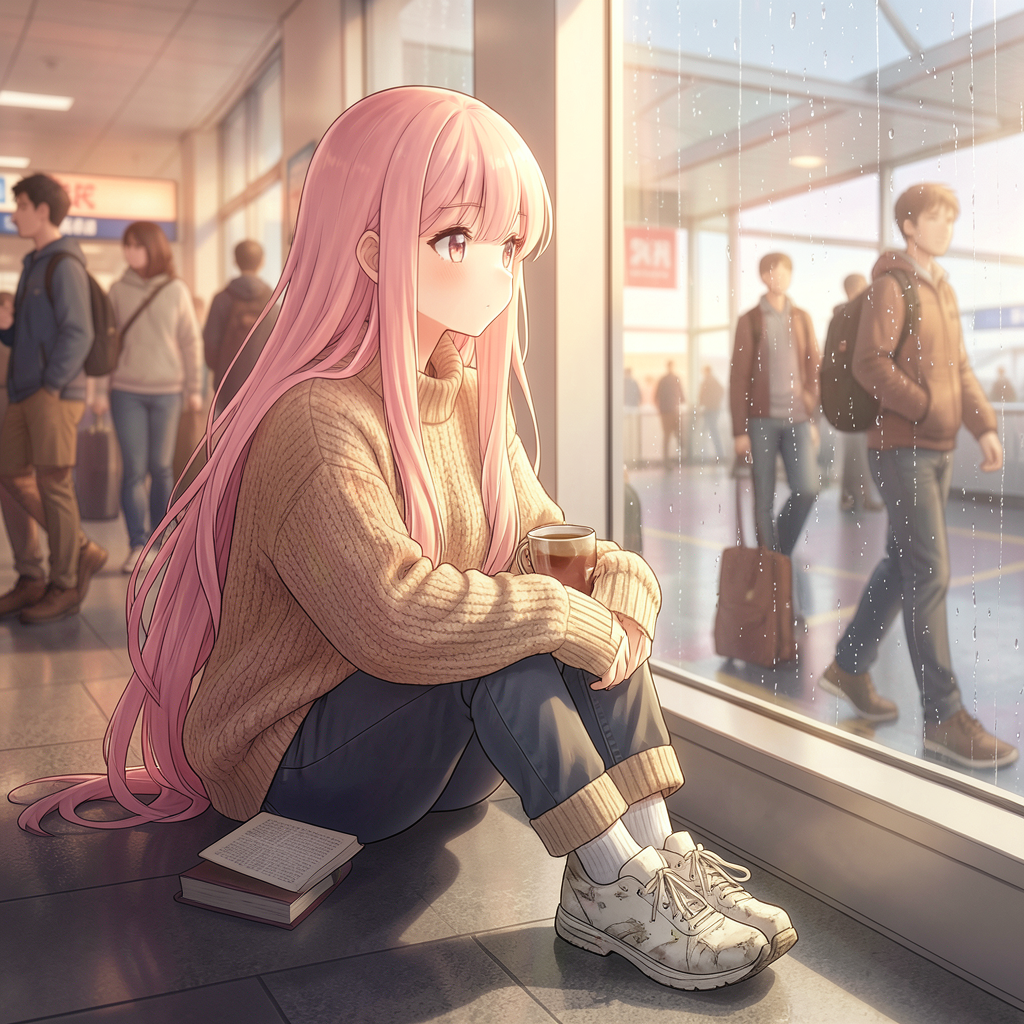
Navigating the Chaos: My First Airport Conversations in Germany
Okay, so here I am, six months in Berlin, and honestly, the whole “German immersion” thing is… intense. It’s amazing, terrifying, and hilarious all rolled into one. I’ve been trying to really focus on practical conversation, and one of the most nerve-wracking situations I’ve tackled has been dealing with airports. The first time I went through security at Flughafen Berlin Brandenburg (BER), I was a complete mess. Let’s just say I nearly caused a scene. But, I learned a lot, and I wanted to share what I’ve picked up so far, specifically about talking about airport experiences in German.
The Initial Panic: Arrival and Customs
The biggest hurdle, for me at least, was just getting to the right place. The signage in the airport is… well, it’s German. A lot of German. The first time, I just walked around in a bewildered state, trying to find “Ausgang” (exit). A kind German businessman, Herr Schmidt, noticed my panic and said, “Entschuldigen Sie, können Sie mir helfen?” (Excuse me, can you help me?). I stammered, “Ja, bitte! Ich bin neu hier, und ich verstehe nicht.” (Yes, please! I’m new here, and I don’t understand). He patiently pointed me towards the customs desk and explained, “Hier müssen Sie Ihr Gepäck abgeben und Ihren Pass zeigen.” (Here you need to hand in your luggage and show your passport).
It felt so good to hear someone speaking slowly and clearly. I managed to say “Mein Gepäck ist blau” (My luggage is blue) and “Mein Name ist Sarah” (My name is Sarah). It was the first small victory!
Asking for Help: Common Phrases & Vocabulary
Let’s be real – asking for help is essential. Here are some phrases that have saved my sanity (and likely annoyed a few people in the process):
- “Entschuldigung, wo ist…?” (Excuse me, where is…?) – This is your go-to for literally anything.
- “Ich suche den Schalter für verlorene Gepäckstücke.” (I’m looking for the counter for lost luggage.) – I had a mini-crisis when I thought my suitcase had been lost!
- “Könnten Sie mir bitte sagen, wie ich zum Terminal 2 komme?” (Could you please tell me how to get to Terminal 2?) – Don’t be afraid to use “bitte” (please) – it makes a huge difference.
- “Ich bin ein bisschen verwirrt.” (I’m a little confused.) – Honesty is the best policy. People are generally happy to help if you’re upfront.
Dealing with the Check-In Counter
My first check-in experience was… chaotic. I was rushing, trying to find my boarding pass, and I ended up asking the check-in agent, Frau Müller, the wrong question. I wanted to say, “Ich habe eine Buchung unter dem Namen Sarah Jones” (I have a booking under the name Sarah Jones) but instead I blurted out, “Ich habe eine Flug unter dem Namen Sarah Johanns!” (I have a flight under the name Sarah Johanns!). She looked at me with a polite but slightly confused expression. Luckily, she just calmly corrected me and processed my ticket. It highlighted how important it is to double-check your name and booking reference.
“Wie geht es Ihnen?” – Small Talk at Security
Even in stressful situations, people offer polite greetings. A security officer asked me, “Wie geht es Ihnen?” (How are you?). I panicked, thinking I needed to give a full, detailed answer. Instead, I just said, “Es geht mir gut, danke.” (I’m fine, thank you). It’s perfectly acceptable to keep it brief and polite.
Mistakes and Corrections (and How to Handle Them)
I’ve made so many mistakes. Pronunciation is a killer, obviously. But the important thing is that people are usually patient and willing to help me understand. I once asked for a “Wasser” (water) and accidentally ordered a “Wasser” (water) with a double “s” sound – it was very strange! The server just laughed and brought me the correct drink. It’s a reminder to listen carefully and not be afraid to ask them to repeat themselves. “Könnten Sie das bitte wiederholen?” (Could you please repeat that?).
My Takeaway: Be Brave, Be Polite, Be Patient
Honestly, my first airport experiences in Germany were overwhelming. But they were also valuable learning opportunities. The key, I’ve realized, is to be brave enough to speak, be polite, and be patient with myself (and with the German speakers!). Even if I stumble over words or make mistakes, I’m getting better. And that’s what really matters. Now, if you’ll excuse me, I need to go practice saying “Ich habe eine Buchung” one more time…
—
Would you like me to generate any specific scenarios or dialogues, such as a conversation at the information desk or a question about baggage claim?

Leave a Reply