
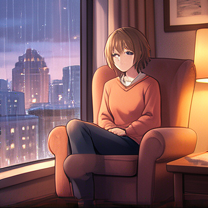
Reflecting on Life – And Learning German Through It
It’s been six months. Six months since I arrived in Munich, six months of trying to build a life, and honestly, six months of realizing just how much I didn’t know… not just about German, but about myself too. I thought learning a language would be this straightforward, like downloading a new app. It hasn’t been. It’s been messy, frustrating, and, when it works, unbelievably rewarding. And strangely, learning German has forced me to confront some things I’d been avoiding – specifically, reflecting on experiences, particularly the uncomfortable ones.
My First “Klatsch” and the Power of “Wie…?”
The first time I really felt the need to delve into this was over coffee with my colleague, Thomas. He’d told me about a mistake he made at work last week – a serious one, involving a shipment of goods. He was clearly upset, a little ashamed, but he was talking it through. I, naturally, blurted out, “Das ist ja schrecklich!” (That’s terrible!).
Thomas just stared at me, a little taken aback. He said, “Warte, warte! Das ist nicht nur ‘schrecklich’. Es ist wie… es ist ein Problem, das wir jetzt lösen müssen.” (Wait, wait! That’s not just ‘terrible’. It’s how… it’s a problem we need to solve now.)
That moment hit me hard. It wasn’t about just saying the words. It was about the way you express something, the nuance. The “wie…?” (how?) was crucial. It encouraged him to elaborate, to explain the situation, not just the outcome. It showed me that German conversation isn’t just about reciting vocabulary; it’s about understanding the feeling behind it.
Talking About “Schmerz” – Painful Memories
This realization extended beyond the office. I’ve been trying to talk to my flatmates, Sarah and Ben, about our past – specifically, a trip we took to the Black Forest a few years ago. There was an argument, a pretty big one, and it’s something that still makes me uncomfortable. I was struggling to bring it up, feeling embarrassed.
Sarah, ever perceptive, said, “Du musst das nicht verstecken, Michael.” (You don’t have to hide this, Michael.) “Es ist okay, es ist Schmerz. Jeder hat Schmerz, oder?” (It’s okay, it’s pain. Everyone has pain, right?)
Using the word “Schmerz” – pain – felt… vulnerable, but it opened a door. I finally managed to describe what happened, the hurt feelings, the unspoken words. Ben jumped in, saying, “Ja, aber wir haben das überstanden!” (Yes, but we got through it!) – a reminder that even difficult experiences can lead to growth.
“Das war gut, aber…” – Reflecting on Successes
It’s not just about the negative. I had a fantastic success at work last week – I presented a new marketing strategy that was incredibly well-received. My boss, Herr Schmidt, was thrilled. I wanted to express my gratitude and reflect on what I’d achieved.
Instead of just saying “Das ist gut!” (That’s good!), I tried, “Das war gut, aber…” (That was good, but…) and then I explained why it was good, highlighting the hard work and the research I’d done. He appreciated the detail, the reflection. It felt more meaningful than a simple compliment.
Common Phrases for Deepening Conversations
Here are a few phrases that have become really useful for me when I’m trying to genuinely reflect on things:
- “Was denkst du darüber?” (What do you think about that?) – Great for getting someone’s perspective.
- “Wie hast du das erlebt?” (How did you experience that?) – Encourages a detailed narrative.
- “Wie hat sich das auf dich ausgewirkt?” (How has that affected you?) – Focuses on the personal impact.
- “Ich habe darüber nachgedacht…” (I’ve thought about that…) – Shows you’re considering the subject seriously.
Don’t Be Afraid to Make Mistakes – “Ich habe mich geirrt”
I’ve made so many mistakes in my German, and honestly, some of them have been incredibly awkward. Trying to express complex emotions with limited vocabulary is… challenging. The other day, I was trying to tell Sarah about a difficult childhood memory and I stumbled over my words, using the wrong verb tense and ending up saying something completely nonsensical.
She just laughed and said, “Keine Sorge, Michael! Du hast dich geirrt.” (Don’t worry, Michael! You made a mistake.) That was a huge relief. It reminded me that making mistakes is part of the learning process, and that people are generally understanding – especially when you show you’re trying.
Moving Forward – More Than Just Words
Learning German isn’t just about acquiring a skill; it’s about opening myself up to a new way of thinking, a new way of communicating, and, ultimately, a deeper understanding of myself and the people around me. It’s about embracing the discomfort of vulnerability and the beauty of honest conversation. “Wie…” I’m still learning, still stumbling, but with each “Wie…?” I’m a little closer to truly connecting with this new world, and with myself. I suspect I will keep encountering more moments where reflection feels particularly important, and for that, I am grateful.

Leave a Reply