
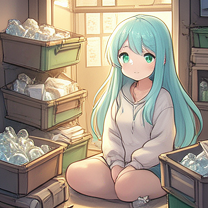
My First Few Weeks of Kampf mit dem Müll – Learning German Through Recycling
Okay, deep breaths. Moving to Berlin was amazing, truly. The culture, the history… it’s incredible. But let me tell you, learning to sort the rubbish has been a serious challenge. It’s not just about chucking things in a bin; it’s about understanding why and how, and that’s where the German is really throwing me. I’ve been trying to focus on the recycling aspect because it’s something I actually do every single day, and it’s a great way to practice.
The Initial Chaos – “Was ist das?!”
The first few days were…well, chaotic. I was walking down the street, saw a blue bin, and just tossed in my cardboard box. A woman, Frau Schmidt, walking her dog stopped me. “Entschuldigen Sie, aber das ist nicht die Papiertonne!” (Excuse me, but that’s not the paper bin!). I was mortified. I mumbled something about being new, about learning, and she was incredibly patient. She explained, in very deliberate German, “Hier ist Papier, hier ist Plastik, hier ist Glas. Wir müssen trennen!” (Here’s paper, here’s plastic, here’s glass. We must separate!). I felt like a complete idiot. I kept saying “Ach du meine Güte!” (Oh my goodness!) under my breath.
Passive Structures – “Wird verwertet?”
The biggest hurdle, honestly, has been the passive voice. Everyone keeps talking about “wird verwertet” (will be recycled). At the Wertstoffhof (recycling center), the guy behind the counter – Herr Müller – kept saying, “Die Plastikflaschen werden recycelt.” (The plastic bottles will be recycled). I kept asking him, “Wer recycelt sie?” (Who recycles them?). He’d just smile and say, “Das ist nicht wichtig. Wichtig ist, dass Sie es richtig tun.” (That’s not important. It’s important that you do it right.) I’m slowly getting it, but it’s still so confusing. I’ve started writing down phrases like “Die Pfandflaschen werden zurückgegeben” (The bottles with deposit will be returned) to help me remember. It’s definitely making me more aware of the process.
Modal Verbs – “Sollen wir…”
Modal verbs are showing up too. I overheard a conversation in the supermarket about the recycling bins. “Sollen wir hier alles reinwerfen?” (Should we throw everything in here?) asked one woman. “Nein, nein! Die Menüs sind hier!” (No, no! The instructions are here!) replied another. I realised that ‘sollen’ (should) is used constantly to give instructions – “Sie sollen das Glas hier reinwerfen” (You should put the glass here). I’m trying to remember this because it feels much more natural than just being told “you must.”
Practical Scenarios – Mistakes and Corrections
Let me tell you about the time I accidentally put a plastic bag in the glass bin. I’d just finished recycling my beer bottles and, exhausted, I chucked the bag in. A young man, Luke, pointed it out to me. “Das geht nicht! Plastik gehört in den Geldbelagerungstonne!” (That’s not allowed! Plastic goes in the cardboard bin!). He was so kind about it, explaining that plastic contaminates the recycling process. I felt absolutely awful, but I listened carefully and thanked him. He said, “Kein Problem! Jeder macht mal Fehler.” (No problem! Everyone makes mistakes).
Vocabulary I’m Using Daily
Here’s a list of the words and phrases I’ve picked up that are actually useful:
- Papiertonne: Paper Bin
- Plastiktone: Plastic Bin
- Glastonne: Glass Bin
- Geldbelagerungstonne: Cardboard Bin
- Wertstoffhof: Recycling Center
- Verwerten: To be Recycled
- Trennen: To Separate
- Müll: Waste / Garbage
- Pfandflaschen: Bottles with Deposit
- Entschuldigen Sie: Excuse me
Moving Forward – A Bit of Success!
It’s still a work in progress, of course. I definitely still make mistakes (sometimes I accidentally put my newspaper in the wrong bin!), but I’m getting better. I’ve started labeling my bins with pictures – a little paper icon for paper, a plastic bottle icon for plastic, etc. – just to help me remember. And I’m trying to ask people when I’m unsure. People here are incredibly helpful, even if I sound completely clueless. I even managed to explain to Frau Schmidt – after a good five minutes – that I was learning about the ‘Kreislaufwirtschaft’ (circular economy) – and she gave me a small smile! “Gut gemacht!” (Well done!).
Honestly, learning German through recycling is a surprisingly effective way to learn, and it’s making me much more aware of my impact on the environment. Now, if you’ll excuse me, I need to go sort my rubbish… sigh.

Leave a Reply