
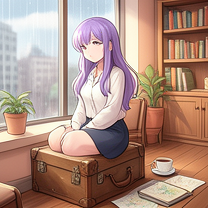
Learning German Through Travel: My Adventures in Berlin
Okay, so I’ve been in Berlin for almost six months now, and let’s be honest, the biggest hurdle wasn’t learning Sprach, it was actually sprechen – talking! I’d spent so long studying vocabulary, but when I actually needed to order a coffee or ask for directions, my brain just seemed to… blank. That’s when I realized learning German related to travel was the perfect way to actually use what I was learning. It forced me to think about how I’d actually talk about my experiences, and that was a game changer.
The First Trip to the Supermarkt – “Wie viel kostet das?”
The first real test came when I wanted to buy some fresh bread. I went to a local Supermarkt – Edeka, which is pretty common here – and needed to ask the baker how much a loaf of Roggenbrot (rye bread) cost. I’d practiced the phrase, “Wie viel kostet das?” (How much does that cost?), but in the moment, I completely froze. I mumbled something, and the baker, a really friendly older man named Hans, just repeated, “Entschuldigung? Was haben Sie gefragt?” (Excuse me? What did you ask?). I finally managed to squeak out, “Wie viel kostet das Roggenbrot?” He smiled and said, “Fünf Euro.” (Five Euros). It was so simple, but the anxiety was huge! The important thing was that I said it.
Ordering Kaffee – “Einen Cappuccino, bitte.”
Then there was the coffee. Seriously, ordering coffee in Germany is a surprisingly complex operation. You can’t just yell “Cappuccino!” at the barista. I tried that the first week and got a massive headache. I learned quickly that “Einen Cappuccino, bitte.” (A cappuccino, please) is much safer. I also learned to say “Mit Milch?” (With milk?) because they ask that every time. I messed up badly once and accidentally asked, “Mit Käse?” (With cheese?!), which caused a lot of confusion and a very awkward stare. My German friend, Lena, laughed and explained that it’s a common mistake – Mit can sound confusing!
Asking for Directions – “Wo ist…?”
Asking for directions is another essential travel phrase. I got spectacularly lost trying to find the East Side Gallery last month. My German wasn’t great, and I started frantically pointing and saying “Wo ist…?” (Where is…?). A young woman, Sarah, patiently pointed me in the right direction. I wanted to say “Danke sehr!” (Thank you very much!), but I just blurted out “Super!” which she found hilarious. She then corrected me, explaining the proper phrasing and even gave me a small map. It’s amazing how a simple “Danke schön” feels so much more genuine.
Common Phrases & Vocabulary
Here are a few other phrases I’ve found super helpful:
- “Ich komme von…” (I come from…) – Useful for introducing myself.
- “Ich bin neu hier.” (I am new here.) – People are generally very welcoming.
- “Kannst du das bitte wiederholen?” (Can you repeat that, please?) – Honestly, I use this constantly.
- “Ich verstehe nicht.” (I don’t understand.) – Don’t be afraid to say it! Germans are generally happy to help.
- “Entschuldigung!” (Excuse me!) – For getting attention or apologizing.
Mistakes & How to Fix Them
My biggest mistake so far has been overthinking things. I’d spend ages constructing the perfect sentence in my head, and then completely freeze when I actually had to speak. Lena told me to just speak. She said, “Mach dir keinen Kopf!” (Don’t make your head!) – basically, relax! Another thing I’ve noticed is that Germans tend to speak a little faster than I’m used to. I’ve been trying to slow down and focus on each word.
My Travel Habit Goals (and how German is helping!)
I’m starting to really enjoy planning my trips around Berlin. I’m using my German to read reviews of restaurants (Restaurants), check train times (Zugtickets), and even look up information about historical sites (Museen). It’s completely transforming my experience. It’s no longer just seeing Berlin; it’s understanding Berlin, and that’s what I’ve been striving for. The best part? Every little conversation, every slightly clumsy sentence, is bringing me closer to fluency. And honestly, learning German through travel has been way more fun (and effective!) than any textbook ever could be. Ich bin so stolz! (I’m so proud!).

Leave a Reply