
My Journey into German: Tourism, Globalization, and a Lot of ‘Entschuldigung’
Okay, deep breath. Six months. Six months since I landed in Berlin, armed with a phrasebook and a terrifying amount of optimism. Let’s be honest, the initial weeks were a blur of disorientation, bad coffee, and desperately trying to order a Bier without accidentally insulting the bartender. But I’m starting to get a grip, and honestly, learning German – especially when it comes to talking about travel and the world – is proving to be unexpectedly fascinating. It’s not just about ordering food, it’s about understanding a whole different way of seeing things.
The First Conversations: “Wo ist…?” and the Tourist Trap
The first thing I realised was that everyone speaks English, especially in tourist areas. But wanting to actually connect, to genuinely experience the city, meant learning the basics. My first few attempts at asking for directions were… humbling. I’d confidently stride up to someone, brimming with my terrible German, and blurt out “Wo ist die U-Bahn?” (Where is the subway?) only to be met with a patient but bewildered stare.
I quickly learned that ‘Wo ist…?’ is a useful phrase, but also a starting point. I kept getting lost because I was relying solely on pointing. I even tried to order a coffee at a cafe near the Brandenburg Gate and, completely mispronouncing Milch, ended up with a coffee mit Schuss (with shots) – a very, very strong start to the day. It was embarrassing, but I got a laugh from the barista, and he corrected my pronunciation. That’s important – they want you to learn!
Tourism Vocabulary: More Than Just ‘Hotel’
The obvious vocabulary is, of course, important. Hotel, Restaurant, Museum, Sehenswürdigkeiten (sights) – I’ve got those down now. But it’s the nuances that really matter when you’re trying to discuss tourism, especially with locals.
For example, I was talking to a woman in a shop in Munich about her family’s holiday. She was describing a Wandertour (hiking tour) in the Alps and used the word ‘Urlaub’ (holiday). It wasn’t just a ‘vacation’; it was this carefully planned, often multi-generational, experience. I realized that German families approach leisure differently. It’s not just about a quick escape; it’s about connecting with traditions and nature.
I’ve started to use phrases like “Ich plane eine Reise nach…” (I’m planning a trip to…) and “Ich möchte die Kultur kennenlernen” (I want to get to know the culture). People really appreciate the effort.
Globalization and the ‘Gemütlichkeit’ Factor
Globalization is a huge topic here. You hear it everywhere – discussions about immigration, the economy, and the impact of international brands. But it’s also tied to this fascinating concept of ‘Gemütlichkeit’ – a feeling of coziness, warmth, and belonging.
I noticed it most in the smaller towns and villages. The local baker, Herr Schmidt, explained that his family had run the bakery for three generations, relying on traditional recipes and local customers. He said, “Wir sind ein Teil dieser Gemeinschaft.” (We are part of this community). This is a huge contrast to the globalized, fast-paced world we often experience at home.
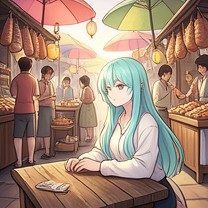
I’ve started trying to engage with this concept by visiting local markets (Wochenmarkt), supporting small businesses, and trying to understand the connection between the past and the present. I even attempted to order a Brezel (pretzel) at a small market stall – a small step towards feeling more integrated.
Misunderstandings and the Importance of “Bitte”
Of course, there have been misunderstandings. A particularly memorable one involved trying to order a simple Brot (bread) at a supermarket. I excitedly announced, “Ich möchte bitte ein Brot!” (I would like a bread!). The cashier looked utterly confused. It turns out, saying “bitte” (please) before every single request is… excessive. I quickly learned to use it sparingly, and now I just say “Ich möchte ein Brot, bitte.” It’s a small detail, but it highlights the importance of observing how native speakers communicate.
My German is Slowly Improving – And So Is My Life
Honestly, I still stumble over my words and occasionally resort to pointing. But I’m learning, slowly but surely. More importantly, I’m starting to understand the German perspective on tourism and globalization – a perspective that values tradition, community, and a healthy dose of Gemütlichkeit. I’m not just a tourist anymore; I’m a student, an immigrant, and, I hope, a friend. And that, I think, is a pretty good start.
Now, if you’ll excuse me, I need to go practice my pronunciation of Kartoffeln (potatoes). It’s proving to be a surprisingly challenging word!

Leave a Reply