
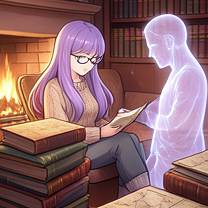
My Journey into German Literature and Who I Am Now
Okay, deep breath. Moving to Berlin was… a lot. I’d always been fascinated by German – the sound of it, the history, the… well, everything, really. But actually living in a place where people speak it fluently, where the culture is so deeply rooted in its own traditions, was something else entirely. And it all started with trying to understand the books.
The Initial Struggle – “Was ist das?”
The first few months, all I wanted to do was order coffee. Seriously. But then I stumbled upon a small, independent bookstore near my apartment in Prenzlauer Berg. It was called ‘Buch & Tee’ – book and tea – and the smell alone was intoxicating. I bought a paperback of “Die Blechtrommel” by Günter Grass. I’d heard so much about it, and figured, ‘Okay, this is a good starting point.’
Immediately, I was lost. The language was so different. I kept getting frustrated, constantly asking “Was ist das?” (What is that?) to the incredibly patient barista at the cafe down the street. He, a friendly guy named Steven, started correcting my pronunciation gently. “Nein, nein,” he’d say, “it’s ‘der’ Dachshund, not ‘das’ Dachshund.” Small things, but they felt huge. I realized I wasn’t just learning German, I was learning how Germans speak German.
Conversations About Kafka – “Es ist so absurd!”
My colleague, Klaus, works in marketing. He noticed my confusion with the German and, bless him, started inviting me to join him and his friends for “Heimatabend” – traditional evenings with food and stories. It was during one of these evenings, talking about Franz Kafka, that things really started to click.
They were discussing “Der Prozess” (The Trial). Klaus said, “Es ist so absurd!” (It’s so absurd!) and I suddenly understood. It wasn’t just the plot; it was the tone of the language, the way Germans express existential dread. Before, I’d been trying to translate every word literally, but now I started picking up on the emotional weight.
I tried to contribute, saying, “Ja, es ist sehr… unglücklich” (Yes, it’s very… unhappy), and Klaus and his friends laughed. It wasn’t about perfect grammar, it was about understanding the feeling.
Misunderstandings and Humour – “Ach, du lieber Gott!”
Of course, there were plenty of misunderstandings. Once, I was trying to explain to my landlord, Herr Schmidt, that the washing machine in the communal laundry room wasn’t working. I said, “Die Waschmaschine ist kaputt!” (The washing machine is broken!). He looked at me, completely bewildered, and said, “Ach, du lieber Gott!” (Oh, my God!). I later learned this phrase is actually used to express annoyance or disbelief – a far cry from the actual meaning of the phrase. It was a really embarrassing moment, but also a funny one.
It made me realize that German, like any language, is full of nuances and expressions that don’t have a direct equivalent in English.
Exploring Identity Through Literature – “Ich bin hier”
The more I read – Hesse’s Steppenwolf, Goethe’s Faust, even some contemporary German authors like Jenny Erpenbeck – the more I started to feel… connected. It wasn’t just about understanding the stories; it was about understanding myself in relation to this culture. I started to see how German literature explores themes of alienation, guilt, and the search for meaning – themes that resonate with my own experiences as an immigrant.
One evening, after reading a particularly poignant passage about feeling lost in a foreign land, I said to Steven, “Ich bin hier, aber ich fühle mich nicht zu Hause” (I am here, but I don’t feel at home). He just nodded and said, “Das ist ein Gefühl, das viele Menschen kennen” (That’s a feeling many people know). And suddenly, I didn’t feel so alone.
Practical Phrases to Know
Here are a few phrases I’ve found incredibly useful:
- “Wie geht es Ihnen?” (How are you? – formal) – Always good to start with.
- “Ich verstehe nicht.” (I don’t understand.) – Don’t be afraid to use it!
- “Könnten Sie das bitte wiederholen?” (Could you please repeat that?) – A lifesaver.
- “Entschuldigung, ich bin neu hier.” (Excuse me, I am new here.) – A good opener.
Learning German through literature has been so much more than just learning a language. It’s been a journey of self-discovery, a deeper understanding of another culture, and a way to find my place in this new, and sometimes bewildering, world. It’s still a work in progress, but I’m enjoying the ride immensely. Und jetzt, ich gehe jetzt einen Kaffee trinken! (And now, I’m going to go have a coffee!)

Leave a Reply