
My First Week: Describing a Getaway Vehicle (and a Lot More!)
Okay, so let me just start by saying, moving to Berlin is…intense. Seriously. I’ve been here for a week as a freelance translator, and it’s a whirlwind of noise, bureaucracy, and surprisingly good coffee. The biggest hurdle so far? Trying to actually do anything without completely freaking myself out. But one thing I’ve realized I absolutely need to be better at is casual conversation. Germans, I’m learning, are incredibly direct, and that includes how they talk about, well, anything. And today, I want to share a particularly awkward, yet incredibly useful, experience I had – describing a car to the police.
The Incident (It Wasn’t Really an Incident)
It was Tuesday. I was driving home from a meeting with a client – a lovely, if slightly intense, architect named Herr Schmidt – and I’d managed to snag a parking spot right outside my apartment building. I’d just finished unloading my laptop and a few boxes when a police officer, a young man named Officer Müller, approached my car. He looked…serious.
“Entschuldigen Sie,” he said, his German perfectly enunciated. “Wir haben einen Bericht über ein Auto in der Nähe gesehen. Können Sie mir sagen, was es ist?” (Excuse me, we received a report about a car in the area. Can you tell me what it is?)
My heart immediately leaped into my throat. I’d been a little careless, you see. I’d accidentally backed out slightly, almost hitting a cyclist. I stammered, “Äh… ja, natürlich. Was genau meinen Sie?” (Uh… yes, of course. What exactly do you mean?)
Color, Make, and Model: The Basics
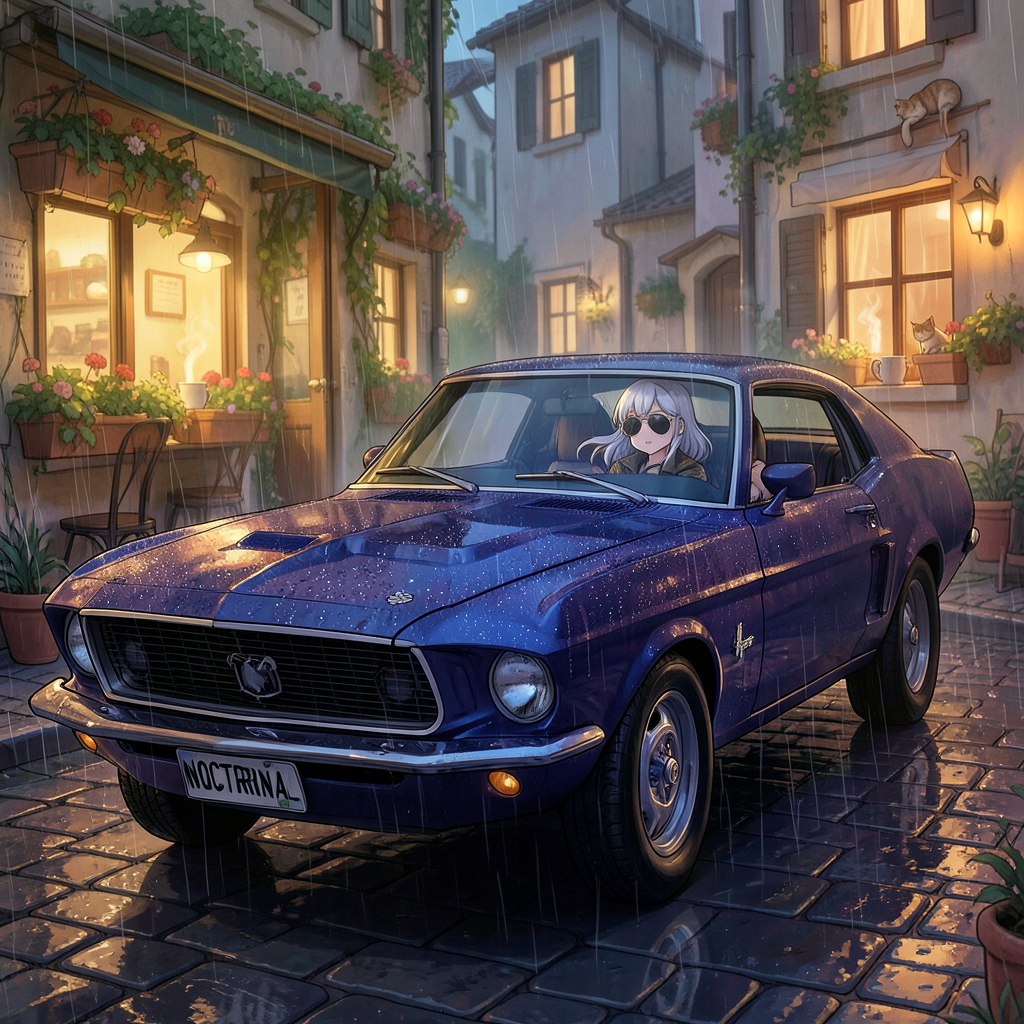
Officer Müller pointed to my car – a slightly battered, but perfectly functional, VW Golf. “Was ist die Farbe?” (What is the color?)
Now, I’m not a huge fan of bright colors, so I instinctively said, “Es ist dunkelblau.” (It’s dark blue.)
He scribbled something in his notepad. “Und das Modell?” (And the model?)
I knew this was important. “Es ist ein VW Golf, älteren Baujahr,” I replied, trying to sound confident. (It’s a VW Golf, older model.) I realized immediately afterwards that “älteren Baujahr” sounded incredibly formal. I should have just said “ein älterer Golf” (an older Golf).
He asked about the license plate, “Die Nummernschild?” (The license plate?)
“Es ist… B-123 XYZ,” I rattled off, feeling a bit ridiculous.
Misunderstandings and Corrections
Officer Müller looked at me with a slightly confused expression. “B-123 XYZ? Das ist nicht richtig. Die Nummernschildnummern müssen mit Buchstaben und Zahlen kombiniert sein. Sie müssen sich an die Regeln halten!” (B-123 XYZ? That’s not right. License plate numbers must be combined with letters and numbers. You have to follow the rules!)
Oh. My. God. I’d completely butchered it. I’d just recited the first part of my license plate, forgetting the remaining digits. It was mortifying. “Entschuldigen Sie, bitte! Es tut mir leid,” I mumbled, feeling my face flush. (Sorry, please! I’m sorry.)
He patiently explained, “Es ist: B-123-456.” (It is: B-123-456.) He wrote it down for me. “Sie müssen die komplette Nummernschildnummer nennen.” (You have to state the complete license plate number.)
Useful Phrases and Vocabulary
Here’s what I picked up from that whole ordeal, and you should too:
- “Was ist das?” (What is that?) – This is your go-to question when you don’t know what something is.
- “Die Farbe ist…” (The color is…) – Simple and effective.
- “Es ist ein… [Make]” (It’s a [Make]) – Example: “Es ist ein BMW.” (It’s a BMW.)
- “Das Modell ist…” (The model is…) – Example: “Das Modell ist ein Audi A3.” (The model is an Audi A3.)
- “Die Nummernschildnummer ist…” (The license plate number is…) – Crucial!
- “Entschuldigen Sie, bitte!” (Sorry, please!) – Always use this when you make a mistake.
Beyond the Police: Real-Life Situations
This experience wasn’t just about a stressful interaction with the police. It’s highlighted how important it is to be able to describe things simply and accurately in German. I’ve already used these phrases when asking about the price of groceries (“Die Farbe der Äpfel ist rot,” – “The color of the apples is red”) and when trying to find a specific street (“Das Modell des Busses ist ein Straßenbahn” – “The model of the bus is a tram”).
It’s still early days, but I’m starting to feel a little more comfortable navigating this new world. And I’m definitely going to double-check my license plate number next time! “Viel Glück!” (Good luck!) to anyone learning German – it’s a challenge, but a rewarding one.

Leave a Reply