
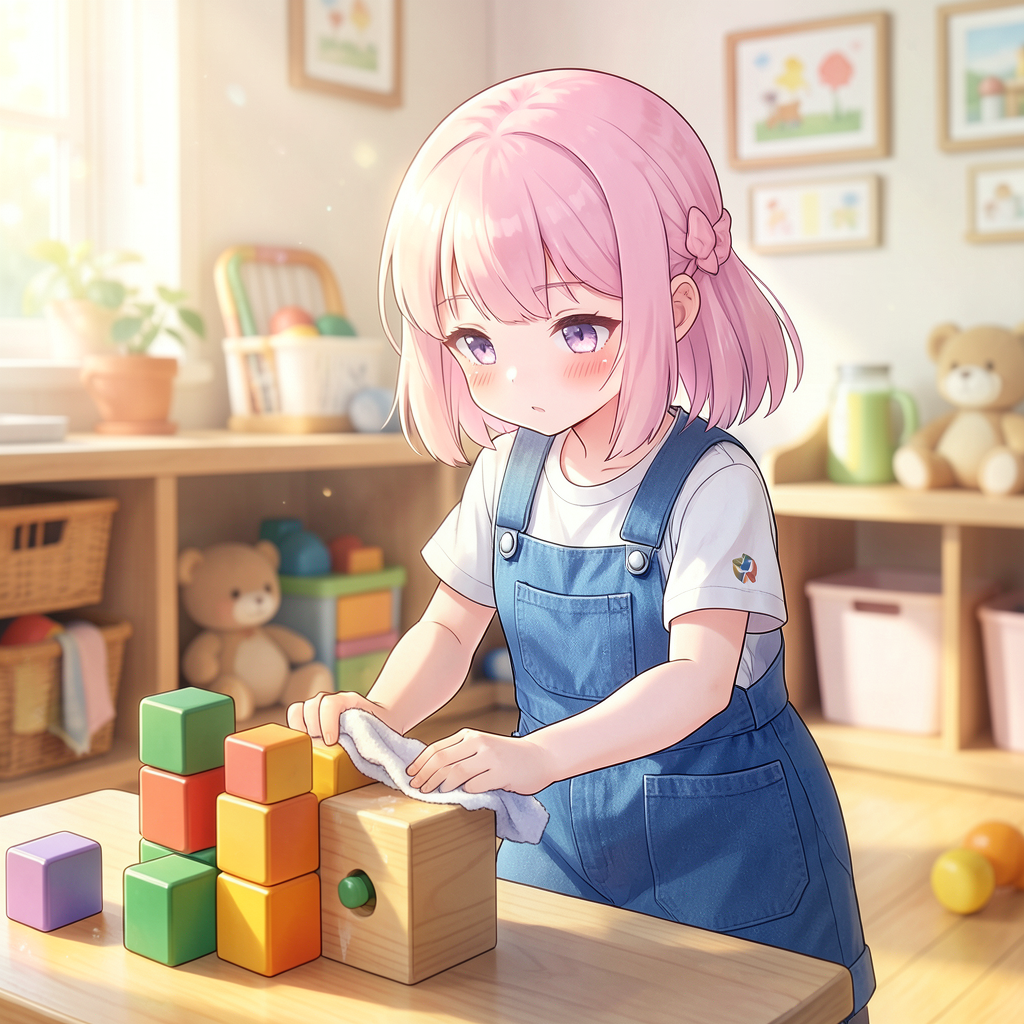
My First Month in a Kita: Cleaning Protocols & a Lot of “Entschuldigung!”
Okay, deep breath. It’s been a month since I started working as a ‘Hilfskraft’ (assistant) at a Kita – a daycare center – here in Munich. It’s amazing, truly, but let me tell you, it’s intense. I’m still finding my feet, and honestly, the biggest shock wasn’t the screaming toddlers (though that’s a fair bit!), but understanding all the little rules and procedures, especially when it comes to cleaning. I’m not a cleaning person naturally – my apartment is usually a disaster zone – but this is different. This is about the safety and health of these little kids.
Initial Confusion & The Word ‘Hygiene’
The first few days were a blur of introductions, settling the children into their routines, and…well, lots of wiping. I quickly realized that ‘Hygiene’ (Hygiene) is a huge word here. It’s not just about making things look nice; it’s a serious business. My supervisor, Frau Schmidt, explained everything very clearly, but my German isn’t perfect, and I kept stumbling over phrases.
I asked her, “Frau Schmidt, wie oft müssen wir den Spielplatz reinigen?” (Frau Schmidt, how often do we need to clean the playground?). She smiled patiently and replied, “Zwei Mal am Tag, mindestens! Und nach jedem Unfall!” (At least twice a day, and after every accident!). “Nach jedem Unfall!” – that felt particularly important.
Daily Cleaning Routine – A Typical Day
So, what does a typical day look like in terms of cleaning? It’s surprisingly detailed. It starts with breakfast cleanup – wiping down tables, sweeping up crumbs, and washing dishes. Then, it’s onto the main event: cleaning the rooms and the playground.
Here’s a breakdown of what I do, based on what I’ve learned:
- Räume putzen (Clean the rooms): This involves wiping down all surfaces – tables, chairs, toys, changing tables – with a special disinfectant solution (Desinfektionsmittel). We always use gloves (Handschuhe)! “Bitte, die Hände waschen, bevor wir beginnen!” (Please, wash your hands before we begin!). It’s drilled into us.
- Spielplatz reinigen (Clean the playground): This is the biggest task. We sweep up leaves and dirt, spray the surface with disinfectant (oftmals für den Außenbereich), and check for any broken equipment. “Schau mal, ein kleiner Stein! Wir müssen ihn aufsammeln!” (Look, a small stone! We need to collect it!).
- Toiletten putzen (Clean the toilets): A less glamorous task, but absolutely crucial. We use a special cleaner (Toilettenreiniger) and bleach (Bleiche) – but only in small amounts and with proper ventilation (Belüftung) – of course. “Entschuldigung, wenn es nicht so appetitlich ist!” (Sorry, if it’s not so appetizing!).
Common Phrases & Vocabulary
Here’s some key vocabulary I’ve picked up:
- Desinfektionsmittel: Disinfectant solution
- Handschuhe: Gloves
- Reinigen: To clean
- Spielplatz: Playground
- Toilettenreiniger: Toilet cleaner
- Bleiche: Bleach
- Entschuldigung: Excuse me/Sorry
- Bitte: Please
- Wie oft? How often?
- Müssen wir…? Do we need to…?
My First Mistake & The Correction
I made a huge mistake early on. I was cleaning the children’s art supplies – lots of crayons and paper – and I just threw all the used paper straight in the bin. Frau Schmidt immediately stopped me. “Nein, nein, nein! Nicht so! Die Papierberge müssen in die spezielle Mülltonne für Hygieneabfälle gehen!” (No, no, no! Not like that! The piles of paper must go in the special waste bin for hygiene waste!). She explained that the paper might have germs and needed to be disposed of properly. “Das ist wichtig für die Hygiene!” (This is important for hygiene!). It was a valuable lesson and a very embarrassing one, but she was incredibly kind and helpful.
Asking Questions & Seeking Clarification
It’s okay to not understand everything immediately. I’ve learned that asking questions is essential. I often say, “Ich verstehe nicht ganz.” (I don’t quite understand.) or “Können Sie das bitte wiederholen?” (Could you please repeat that?). Frau Schmidt is always happy to explain things patiently, and the other ‘Erzieher’ (educators) are very supportive.
The Importance of Following Protocol – “Nach Vorschrift”
One thing I’ve noticed is the emphasis on following the “Nach Vorschrift” (according to regulations) – everything has a specific procedure. There are checklists (Checklisten) we have to complete, and we have to document everything. It seems a little rigid at times, but it’s clearly in place to ensure the children’s safety and well-being.
I’m still learning, and I know I have a lot more to go, but I’m feeling more confident each day. And honestly, cleaning up after little kids? It’s strangely rewarding. “Gut gemacht!” (Well done!) to me for taking on this challenge!
Do you want me to elaborate on a specific area, like the different cleaning solutions or the specific types of waste containers we use?

Leave a Reply