
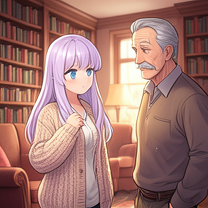
My First Foray into German Directions – It’s Harder Than I Thought!
Okay, deep breaths. I’ve been in Berlin for six months now, and while I can order a coffee (usually with Schmilk – oat milk, because let’s be honest, regular milk is a bit much at first), and I can even fumble through a simple conversation about the weather, asking for directions? That’s been… a challenge. I keep getting so flustered, and I’m pretty sure I’ve confused links (left) with rechts (right) more times than I’d like to admit. This isn’t about fluency, it’s about basic survival, and right now, that feels a million miles away.
The Initial Panic – “Wo ist…?”
The first few times I needed directions, I just launched into a panicked “Wo ist…?” (Where is…?). I’d point vaguely, hoping someone would magically understand. It rarely worked. People would look at me, confused, and often respond with a rapid-fire barrage of German that washed over me completely. I quickly learned that just shouting “Wo ist…?” wasn’t going to cut it.
I had a particularly mortifying experience trying to find the Hackesche Höfe market. I’d read about it in my guidebook, and I was determined to find it. I approached a woman sitting outside a cafe and blurted out, “Wo ist die Hackesche Höfe?” She stared at me for a moment, then said something incredibly fast – “Links, dann die zweite Strasse rechts, dann…”, and I just froze. I mumbled, “Entschuldigung?” (Excuse me?), and she patiently pointed, but I’d already lost my train of thought. It took me nearly an hour and a very kind man who spoke broken English to finally find my way.
Building a Basic Vocabulary – Key Phrases
It’s been a slow process, but I’m starting to build a little vocabulary. Here are the phrases I’ve found most useful:
- “Entschuldigung, könnten Sie mir helfen?” (Excuse me, could you help me?) – This is essential. Always start with this, even if you think you can just ask a simple question. It shows respect and gives people permission to help.
- “Ich suche…” (I am looking for…) – Follow this with your destination.
- “Wo ist…?” (Where is…?) – Still useful, but used after you’ve established that you need help.
- “Links” (Left) – Seriously, I’ve written this word down a million times.
- “Rechts” (Right) – Equally important!
- “Geradeaus” (Straight ahead) – A lifesaver!
- “Wie weit ist es?” (How far is it?) – Helpful for gauging the distance.
- “Ist das die…?” (Is this the…?) – Use this if you’re not sure you’re at the right place.
Example Conversations – Putting it into Practice
Let’s look at a couple of scenarios:
Scenario 1: Asking for the train station
Me: “Entschuldigung, könnten Sie mir helfen? Ich suche den Bahnhof.” (Excuse me, could you help me? I’m looking for the train station.)
Person: “Geradeaus, dann die dritte Strasse rechts. Sie sehen ein großes Gebäude, dann sind Sie da.” (Straight ahead, then the third street on the right. You’ll see a large building, then you’re there.)
Me: “Vielen Dank!” (Thank you very much!) – I immediately realized I should have asked, “Wie weit ist es?” (How far is it?)
Scenario 2: Giving directions
Me: “Entschuldigung, wissen Sie, wo die U-Bahn-Station Alexanderplatz ist?” (Excuse me, do you know where the U-Bahn station Alexanderplatz is?)
Person: “Ja, natürlich. Gehen Sie geradeaus, bis Sie eine Ampel sehen. Dann biegen Sie links ab. Die Station ist in zwei Minuten zu Fuß.“ (Yes, of course. Go straight until you see a traffic light. Then turn left. The station is a two-minute walk.)
Mistakes and Corrections – Learning From My Blunders
I’ve made so many mistakes. I once asked for the Museumsinsel (Museum Island) and accidentally asked for the Museums-Eis (Museum Ice cream!). It wasn’t the same, obviously, but the confusion was hilarious – and a serious reminder to really listen to the response.
Another time, I was trying to describe the Brandenburger Tor (Brandenburg Gate) and completely mixed up the words. I kept saying Tore (gates) instead of Tor (gate). It’s a silly mistake, but it highlighted how easily I can get thrown off track.
My Strategy – Slow and Steady
Honestly, my current strategy is to simply ask for directions, even if I don’t understand everything. I focus on picking out key words – like “links,” “rechts,” and “geradeaus” – and repeating them back to the person. I also try to take notes, sketching out a map if necessary. I’m starting to realize that people are generally happy to help, even if my German isn’t perfect.
It’s still a huge work in progress, but I’m slowly, painfully, getting better. And, you know what? That feeling of successfully navigating the streets of Berlin, even just a little bit, is incredibly rewarding. Weiter geht’s! (Let’s keep going!)

Leave a Reply