
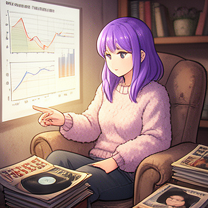
Decoding Culture: My Journey into Analyzing Trends in Germany
Okay, so here I am, six months in Berlin, and let’s be honest, my German is…patchy. I can order a Bier (beer) and ask where the Toilette is, but attempting a complex conversation often ends in a glorious, slightly panicked, mess. However, something unexpected has happened: I’m actually starting to understand why things are the way they are here, and it’s all thanks to trying to analyze cultural trends. It started with a simple observation, and now it’s become a surprisingly useful skill.
The First Observation: The Kaffeeklatsch Phenomenon
It all started with my colleague, Klaus. He’s a graphic designer, super cool, and perpetually covered in paint. We were grabbing coffee after a late night working on a project, and he was complaining about his boss, Herr Schmidt. “Er ist so konservativ!” (He’s so conservative!) he grumbled, “Die Firma verabschiedet sich langsam von neuen Ideen.” (The company is slowly ditching new ideas.) I asked him, genuinely curious, “Warum denkst du das?” (Why do you think that?)
He explained that his company – a traditional printing house – was resistant to adopting digital marketing strategies. Apparently, the “old guard” were still clinging to print brochures and direct mail, even though everyone else was moving online. It struck me as a really interesting cultural trend – a resistance to change within a seemingly progressive industry. This was my first real clue. I started noticing similar patterns everywhere – the stubbornly traditional bakeries, the hesitation in adopting new tech in smaller businesses… it felt like Germany was simultaneously embracing innovation and holding onto its heritage.
Learning the Language of Observation: Key Phrases & Vocabulary
You can’t analyze trends without being able to talk about them, right? Here’s a little breakdown of what I’ve picked up:
- “Das ist ein Trend!” (That’s a trend!) – Super useful for pointing out shifts in behaviour.
- “Was ist der Grund dafür?” (What’s the reason for that?) – For digging deeper.
- “Es ist ein kulturelles Phänomen.” (It’s a cultural phenomenon.) – Elevates the observation, making it sound more significant.
- “Die junge Generation ist anders.” (The younger generation is different.) – A classic, but surprisingly accurate, observation about generational shifts.
- Vocabulary: Konservativ (conservative), innovativ (innovative), traditionell (traditional), Veränderung (change), Wohnungstrend (housing trend), Foodtrend (food trend) – Start building your vocabulary here.
My First Misunderstanding (and Correction!)
I made a classic newbie mistake last week at the local Bauhaus (Bauhaus – design store). I was admiring a minimalist, grey sofa and excitedly told the sales assistant, “Das ist ja super modern!” (That’s really modern!) He looked at me, utterly bewildered. ” Modern?” he asked, “Das ist ein Klassiker!” (Classic!) He explained that the sofa was a popular design from the 1970s, and that “modern” here meant something entirely different – sleek, minimalist, and cutting-edge.
I felt like such an idiot! It highlighted the importance of understanding context. ” Entschuldigung!” (Sorry!) I stammered, and he chuckled, saying, “Kein Problem!” (No problem!) This taught me to observe how people use the words, not just what they mean literally.
Decoding the Kiez (Neighborhood) Culture
My Kiez (neighborhood) in Kreuzberg is a brilliant microcosm of Berlin’s trends. The rise of veganism is hugely visible here – there are vegan restaurants on every corner, and even some of the traditional Wurst (sausage) stands offer veggie options. The shift towards cycling is also palpable – everywhere you look, people are on bikes. I’ve noticed a definite increase in artisan coffee shops (the Third Wave coffee movement) and small, independent boutiques popping up. It’s fascinating to see these trends play out on a local level. I’ve started documenting my observations in a small notebook, noting down the new shops that open, the conversations I overhear, and anything that seems out of place or surprising.
Moving Beyond Observation – Asking the Right Questions
Simply observing isn’t enough. You need to ask questions – but you need to ask them the right way. Instead of saying, “Warum ist Berlin so teuer?” (Why is Berlin so expensive?), which just gets a shrug and an explanation about the property market, I’ve found that asking ” Wie hat sich die Mieten in den letzten fünf Jahren verändert?” (How have rents changed in the last five years?) is much more productive. It encourages a deeper explanation and shows you’re genuinely interested in understanding the dynamics.
The Bigger Picture: Tradition, Innovation, and the German Zeitgeist
Analyzing trends here isn’t just about spotting the latest fashion or food fad. It’s about understanding the underlying values and forces shaping German society – the tension between tradition and innovation, the importance of order and efficiency, and the deep-rooted respect for history. It’s a complex puzzle, and I’m slowly, painstakingly, putting the pieces together. And honestly? It’s the most rewarding thing I’ve done since arriving. Viel Erfolg! (Good luck!) – to me, and to anyone trying to understand this fascinating culture.

Leave a Reply