
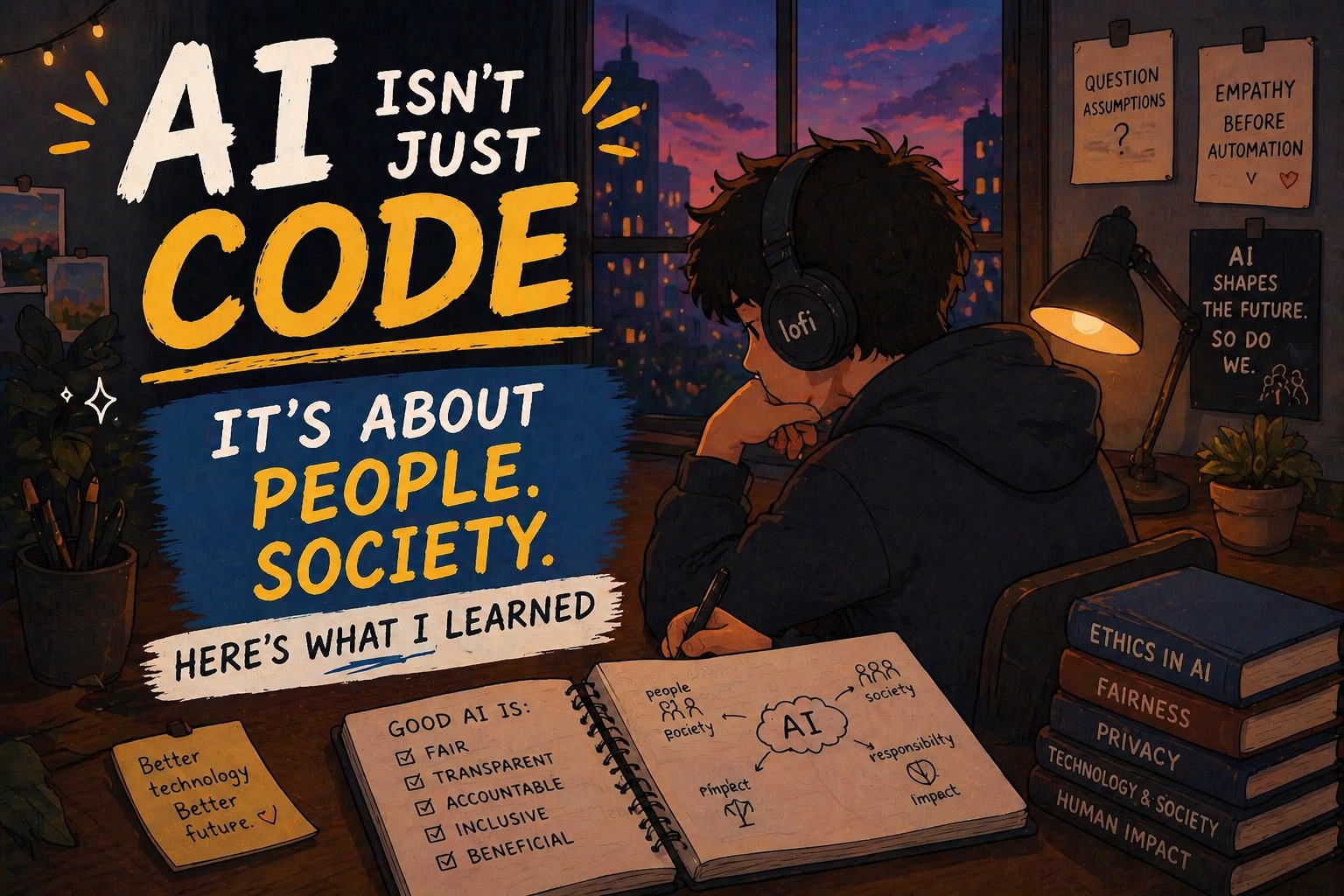
A first-person guide to understanding the real impact of artificial
intelligence
When I first started learning about artificial intelligence, I focused
almost entirely on the technical side—algorithms, models, and data. I
thought that mastering these would be enough.
But over time, I realized something important:
understanding AI isn’t just about building systems—it’s about understanding
their impact on people and society.
That shift completely changed how I study, think, and prepare for
AI-related exams and applications.
Here’s what I learned—and how you can approach it too.
——————————
🤯 The realization: AI is everywhere
At first, AI felt abstract. But then I started noticing it in daily life:
–
recommendation systems
–
navigation apps
–
hiring tools
–
healthcare decisions
👉 “I realized AI isn’t just technology—it shapes real decisions.”
That made me take the topic much more seriously.
——————————
🧠 Step 1: I focused on understanding, not memorizing
Instead of trying to remember definitions, I asked myself:
–
What does this system actually do?
–
Who does it affect?
–
What could go wrong?
👉 “If I couldn’t explain it simply, I didn’t really understand it.”
This helped me build deeper knowledge.
——————————
⚖️ Step 2: I started thinking about fairness
One concept that stood out to me was bias in data.
I learned that:
–
AI systems reflect the data they learn from
–
biased data can lead to unfair outcomes
👉 “Technology can unintentionally reinforce inequality.”
That made ethics a core part of my learning.
——————————
🔍 Step 3: I asked better questions
Instead of just solving problems, I started asking:
–
Is this system fair?
–
Is it transparent?
–
Can people trust it?
👉 “Good AI isn’t just accurate—it’s responsible.”
This mindset made my answers stronger in tests and discussions.
——————————
📊 Step 4: I connected theory to real life
I tried to link concepts to real examples:
–
facial recognition → privacy concerns
–
recommendation systems → filter bubbles
–
automated decisions → fairness risks
👉 “Real examples made abstract ideas easier to understand.”
——————————
✍️ Step 5: I practiced explaining ideas clearly
Whether in writing or speaking, I focused on:
–
simple explanations
–
logical structure
–
relevant examples
👉 “Clarity is more powerful than complexity.”
This helped me stand out.
——————————
⚠️ Mistakes I avoided
Looking back, I’m glad I didn’t:
–
focus only on technical details
–
ignore ethical questions
–
memorize without understanding
–
avoid real-world thinking
These would have limited my progress.
——————————
📈 What changed for me
After changing my approach:
–
I understood concepts faster
–
I could explain ideas more clearly
–
I felt more confident in discussions
👉 “Confidence came from understanding, not memorization.”
——————————
🧩 Key lessons that worked for me
If I had to summarize:
–
think beyond code
–
connect ideas to real life
–
consider ethical impact
–
practice explaining clearly
——————————
✨ Final thoughts
Learning about AI in society isn’t just about passing a test—it’s about
becoming a more responsible thinker.
👉 “Technology shapes the future—but we shape how it’s used.”
If you’re studying AI right now, don’t just ask how it works.
Ask why it matters.

Leave a Reply