
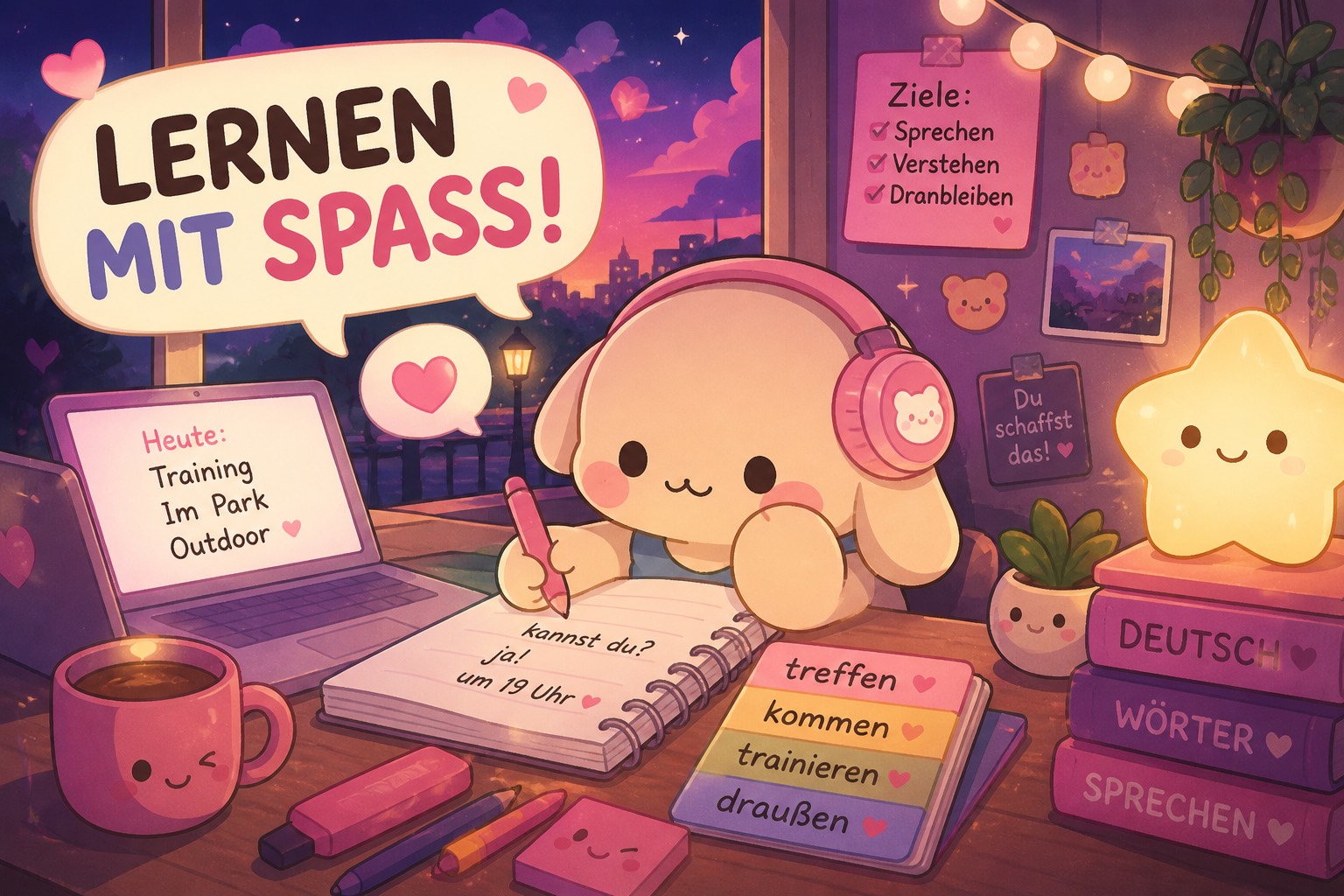
When I first started learning German, I focused heavily on grammar books
and vocabulary lists. I believed that if I memorized enough words, I would
eventually become fluent.
But something was missing.
I could understand individual words, yet I struggled in real
conversations—especially in casual situations like meeting people or
planning activities. That’s when I discovered a more effective approach:
learning through simple, everyday chat scenarios.
——————————
🟢 A1 – Just Responding
In the beginning, I didn’t try to say much. I focused on recognizing simple
questions and giving short answers.
For example:
–
“Kommst du heute?”
–
→ “Ja.”
It felt basic, but it helped me build confidence.
👉 What I learned:
You don’t need full sentences at first. Understanding and reacting is
enough.
——————————
🔵 A2 – Building Simple Sentences
After some practice, I started expanding my answers:
–
“Wann treffen wir uns?”
–
→ “Um 19 Uhr.”
–
“Wo?”
–
→ “Im Park.”
Now I wasn’t just reacting—I was participating.
👉 Key insight:
Short, clear answers are more useful than complicated sentences you can’t
control.
——————————
🟡 B1 – Keeping the Conversation Going
At this stage, I began connecting ideas:
–
“Ich komme um 19 Uhr in den Park.”
–
“Wir trainieren draußen.”
I could finally follow the flow of a conversation, not just individual
lines.
👉 This changed everything:
I started to feel like I was actually communicating, not translating.
——————————
🟠 B2 – Handling Real Situations
Real conversations are not always perfect. People cancel, get sick, or
change plans.
I learned how to respond naturally:
–
“Ich kann heute leider nicht kommen.”
–
“Ich bin erkältet.”
–
“Kein Problem, gute Besserung!”
👉 Important lesson:
Language is not just about information—it’s about empathy and interaction.
——————————
🔴 C1 – Speaking Naturally
At an advanced level, conversations feel effortless:
–
“Treffen wir uns direkt vor Ort oder vorher?”
–
“Wollen wir danach noch etwas trinken gehen?”
I no longer think about grammar rules. I just express ideas clearly and
naturally.
👉 This is the goal:
To communicate without hesitation.
——————————
🧠 What Made the Difference
Practicing with real-life chat scenarios helped me improve faster than
traditional methods.
Why?
Because it teaches:
–
how people actually speak
–
how conversations flow
–
how to react in real time
——————————
⚠️ Mistakes I Made Before
Looking back, I used to:
–
focus too much on perfect grammar ❌
–
avoid speaking until I felt “ready” ❌
–
ignore simple everyday conversations ❌
These habits slowed me down.
——————————
✅ What Works for Me Now
Now I practice differently:
1.
Use simple conversations daily
2.
Repeat common phrases
3.
Simulate real situations
4.
Focus on communication, not perfection
——————————
🌍 Real-Life Impact
This approach helped me in situations like:
–
meeting new people
–
planning activities
–
responding naturally in chats
Even simple topics like meeting in the park or going to training became
powerful learning tools.
——————————
🎯 Final Thought
Learning German doesn’t have to be complicated.
Sometimes, all it takes is a simple message like:
–
“Kommst du heute?”
From there, a real conversation begins—and that’s where real learning
happens.

Leave a Reply