
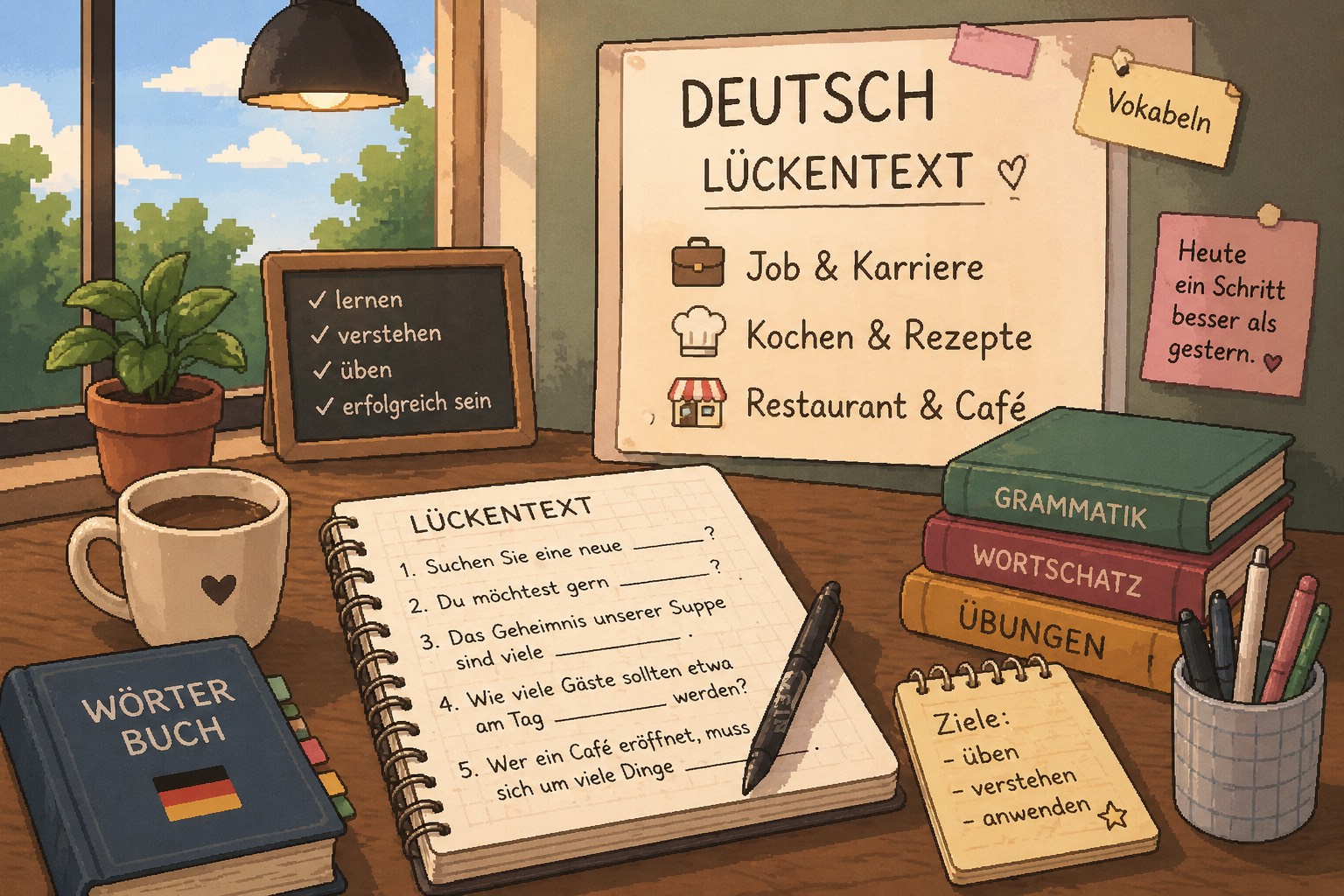
When I worked through this lesson, I focused on learning German through
everyday topics like job opportunities, cooking, and starting a small
business. I noticed that these situations are very common in real life, so
the vocabulary feels practical and useful.
At the beginning, I learned how to understand simple job advertisements. I
practiced words like Möglichkeit, verdienen, and Vorkenntnisse. I also saw
that many jobs are open to beginners, especially if they are motivated and
willing to learn. This helped me understand how to talk about work and
applications in German.
After that, I moved on to topics related to cooking. I learned how to
describe food and courses, and I practiced verbs like kochen and anmelden.
These expressions are helpful when joining a class or talking about hobbies.
One part I found especially interesting was about food, like soup and
recipes. I learned words such as Gewürze and phrases used to describe taste
and quality. This made it easier for me to talk about meals and give simple
opinions.
Later in the lesson, the focus changed to planning a restaurant or café.
Here, I learned more complex vocabulary like Planung, Kosten, and
Finanzierung. I also practiced thinking about practical questions, such as
how many guests to expect and how to calculate expenses.
At the advanced level, I understood that running a business requires more
than just a good idea. I learned about responsibilities, dealing with
authorities, and the importance of preparation. Words like Behörden and
bestehen helped me express more complex ideas.
Overall, this lesson helped me build vocabulary step by step while staying
connected to real-life situations. I feel more confident now when talking
about work, food, and business in German.

Leave a Reply