
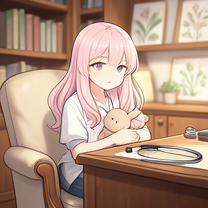
Navigating the Doctor’s Office: My First Experiences with German Healthcare
Okay, so moving to Berlin was amazing, truly. The history, the food, the people…it’s everything I hoped for. But let’s be honest, the initial shock of a new country doesn’t just hit you with culture, it hits you with everything. And nothing was quite as daunting as figuring out the healthcare system. I’d heard stories about the bureaucracy, and frankly, I was terrified of making a mistake that would mean a hefty bill or worse, getting the wrong diagnosis. I really wanted to get comfortable talking about health, and that started with learning how to talk to a doctor – a deutch doctor.
The First Appointment: “Ich habe Kopfschmerzen”
My first appointment was for a minor thing – a persistent headache. I’d been battling it for weeks, and I knew I needed to get it checked out. I’d spent ages researching, and I was already stressing about the paperwork. I arrived at the Arztpraxis (doctor’s office) and the receptionist, a very efficient woman named Frau Schmidt, asked me, “Was ist der Grund Ihres Besuchs?” (What is the reason for your visit?).
I blurted out, “Ich habe Kopfschmerzen,” (I have a headache) which I’d practiced a hundred times, but suddenly felt incredibly clumsy. She wrote something down and then said, “Bitte legen Sie sich auf die Liege.” (Please lie down on the couch). The couch was surprisingly firm!
The doctor, Dr. Müller, was friendly enough, but his German was…fast. He asked a lot of questions, and I felt like I was desperately trying to keep up. He asked, “Wo genau schmerzt es?” (Where exactly does it hurt?). I managed to say, “Es tut weh an der Stirn und am Hinterkopf” (It hurts on my forehead and the back of my head). I felt a little proud of myself, even though I stumbled over the words.
Essential Vocabulary & Phrases
Let’s look at some phrases I’ve found super useful:
- Wie geht es Ihnen? (How are you?) – A polite way to start the conversation.
- Ich fühle mich nicht gut. (I don’t feel well.) – A classic, and essential.
- Ich habe Schmerzen… (I have pain…) – Use this to describe your symptoms.
- Wo genau tut es weh? (Where exactly does it hurt?) – Helpful to pinpoint the location.
- Kann ich ein Rezept bekommen? (Can I get a prescription?) – Important if you need medication.
- Wie ist die Diagnose? (What is the diagnosis?) – Don’t be afraid to ask!
- Was sind die nächsten Schritte? (What are the next steps?) – Clarify the plan.
Misunderstandings & Embarrassments – And How to Avoid Them
Okay, this is important. My first mistake was trying to explain my symptoms with overly detailed medical jargon. I started talking about “neuralgia” and “muscle spasms,” and Dr. Müller just looked at me blankly. He quickly steered the conversation back to simpler terms.
Another time, I said, “Ich habe ein Problem mit meinem Bauch” (I have a problem with my stomach) – which is perfectly fine German. But I realized later that “Bauchschmerzen” (stomach ache) is much more common and understood. It’s always best to use the most natural-sounding phrases.
I also learned that directly asking “Wie viel kostet das?” (How much does this cost?) is considered rude. You’re supposed to ask about the costs after you’ve discussed your treatment options.
Talking About Medication
Ordering medication in Germany can be a little different. You don’t just say “Give me this pill!” You need to be specific. I asked for “ein Rezept für Paracetamol” (a prescription for paracetamol – that’s the generic name for Tylenol). I learned that the pharmacist (Apotheker) handles the prescription and the actual dispensing of medication. I was slightly confused when I first went to the Apotheke (pharmacy) – the pharmacist spoke so quickly! I quickly realized it’s okay to say, “Könnten Sie das bitte langsam erklären?” (Could you please explain that slowly?).
A Helpful Tip: “Ich bin neu hier” (I am new here)
I found that saying “Ich bin neu hier” (I am new here) to the doctor and the receptionist helped them understand that I might be a little nervous and unfamiliar with the process. It gave them a little leeway to explain things more slowly and patiently.
Learning about German healthcare was a huge challenge, but it’s also been incredibly rewarding. It forces you to engage with the language, to communicate clearly, and to understand a whole new way of thinking about health and wellbeing. And honestly, it’s made me feel more confident and prepared for whatever health challenges come my way. Ich bin stolz auf mich! (I’m proud of myself!)

Leave a Reply