
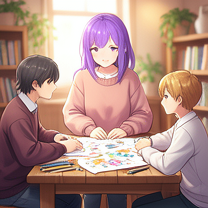
Navigating the Arbeitsplatz: Teamwork & German Conversations
Okay, so here I am, six months in Munich, and let’s be honest, it’s been a rollercoaster. The language barrier is real, but I’m starting to get a handle on things. And one of the biggest hurdles, surprisingly, wasn’t ordering a pretzel (though that was tricky at first!). It’s been understanding and participating in team discussions, and how the Germans approach teamwork – it’s a whole different ballgame.
The Initial Confusion – “Wir” vs. “Ich”
My first few weeks at the marketing agency were… overwhelming. Everyone was talking about “wir” – “we” – constantly. I kept instinctively responding with “ich” – “I” – and it felt incredibly awkward. I remember one meeting where we were brainstorming a campaign for a new German sports drink, “Power-Up”. My colleague, Klaus, said, “Wir sollten die Kampagne auf junge Leute ausrichten.” And I blurted out, “Ich denke, das ist eine gute Idee!” Klaus looked genuinely confused. He gently explained, “Nein, nein. Wir müssen zusammenarbeiten! ‘Wir’ bedeutet ‘together’ in diesem Fall.” It just clicked, but the initial feeling of being the only one thinking independently was frustrating.
Practical Phrases for Team Discussions
So, I started paying attention to how they actually talk. Here are some phrases I’ve found really helpful:
- “Was meinen Sie dazu?” (What do you think about that?) – This is the go-to question. It’s polite and invites input.
- “Wie sehen Sie das?” (How do you see it?) – Similar to above, but slightly more focused on their perspective.
- “Ich bin anderer Meinung.” (I have a different opinion.) – You absolutely need to learn this! It’s perfectly acceptable to disagree, but do it respectfully. I had to use it when my team suggested a very aggressive marketing strategy – “Ich bin anderer Meinung. Ich glaube, wir sollten einen eher positiven Ansatz wählen.”
- “Okay, dann machen wir das so.” (Okay, then we’ll do it that way.) – A common way to reach a decision.
- “Gut, dann sollten wir…” (Good, then we should…) – A way to build on someone else’s idea.
A Typical Project Meeting – The Detail-Oriented Approach
Last week, we were working on a proposal for a client – a new organic bakery. The meeting started with a very detailed review of the budget. Everyone was discussing line items, percentages, and potential cost overruns. It was incredibly methodical. One of the team members, Alice, said, “Die Kosten für die Zutaten müssen genau kalkuliert werden.” (The costs for the ingredients need to be precisely calculated.) I realized then that German discussions aren’t usually about grand visions; they’re about meticulously planning every detail. It’s not that they don’t have ideas, it’s just that they want to make sure everything is solid before moving forward.
Misunderstandings and Learning from Mistakes
There have been a few times I’ve made mistakes. Once, I jumped in with a suggestion without fully hearing the discussion – “Ich habe eine Idee!” – and it turned out my idea was already covered. Klaus gently corrected me, saying, “Es ist gut, dass Sie Ideen haben, aber wir müssen zuerst verstehen, was bereits besprochen wurde.” (It’s good that you have ideas, but we need to first understand what has already been discussed.) I learned a valuable lesson: listen first, speak after.
The Importance of “Feedback” – Ehrlich und Konstruktiv
Giving and receiving feedback is a big deal in Germany. It’s called “Feedback”, but they deliver it very directly – and honestly. It wasn’t always easy to hear, but I realized that it’s meant to be constructive. I received some feedback on my initial campaign ideas – they were considered “too American” and lacking a strong German cultural connection. It stung a little, but I realized they were right. I thanked them for their honesty and used their feedback to refine my approach. “Vielen Dank für Ihr ehrliches Feedback. Ich werde das berücksichtigen.” (Thank you for your honest feedback. I will take that into account.)
Building Relationships – “Kaffeepause” and Small Talk
Beyond the project work, I’ve noticed that building relationships is key. The regular “Kaffeepause” (coffee break) is more than just a chance to get caffeine; it’s an opportunity to chat and build rapport. I started by asking simple questions about their weekends – “Wie war Ihr Wochenende?” – and slowly, we’ve started having more genuine conversations. I’ve learned a lot about German culture simply by sitting around a table with my colleagues.
Next Steps: Active Listening & Respectful Dialogue
I’m still learning, and I definitely have a long way to go. But I’m starting to understand that teamwork in Germany isn’t about flashy ideas; it’s about careful planning, honest feedback, and a deep respect for collaborative effort. My goal now is to improve my listening skills, always ask clarifying questions (“Könnten Sie das bitte wiederholen?” – Could you repeat that, please?), and approach every discussion with a willingness to learn and contribute – “Ich möchte gerne mitarbeiten.” (I would like to participate.)

Leave a Reply