
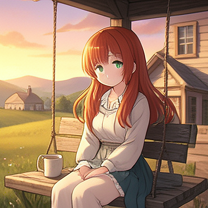
My First Year in Brandenburg: Talking About Life in the Country
Okay, so here I am, a year into living in Brandenburg, and let me tell you, it’s been… an experience. I moved here from London for a job as a software developer for a small agricultural tech company, and while the work is great, navigating everyday life, especially when it comes to talking about the rural aspects of things, has been a huge learning curve. I thought I was relatively comfortable with the language, but suddenly, everything feels so much more nuanced. It’s not just about saying “Ich mag Käse” (I like cheese); it’s about understanding the why behind people’s opinions about, well, everything.
The First Conversation – Farmer Schmidt and the Rain
The first real eye-opener happened when I was trying to be friendly with Farmer Schmidt, who lives next door to my apartment. I’d noticed he was out working in his fields most mornings, and I wanted to make a good impression. I asked him, “Wie war das Wetter heute?” (How was the weather today?).
He replied, “Nee, gar nicht gut. Wieder so ein Wasserfest!” (No, not good at all. Another wet day!).
I, in my infinite optimism, responded, “Oh, das ist schade. Aber die Regen sind wichtig für die Ernte!” (Oh, that’s a shame. But the rain is important for the harvest!).
He looked at me completely bewildered. “Was? Wichtig? Die Regen ruinieren die Ernte! Das ist doch alles kaputt machen!” (What? Important? The rain ruins the harvest! It’s ruining everything!).
It took a good ten minutes of frantic gesturing and a hastily consulted Google Translate search (“too much rain bad for crops”) to realize that he wasn’t being deliberately negative. He genuinely believed that excessive rain was a disaster. I learned a crucial lesson that day: understanding the local context is everything.
Essential Phrases for Rural Discussions
Here’s a list of phrases that have become invaluable for me, broken down by situations:
- “Das ist hier ganz anders als in der Stadt.” (This is very different here compared to the city.) – Useful for explaining your initial shock at the pace of life.
- “Wie ist das Leben auf dem Land?” (How is life in the countryside?) – A great opener for conversations with locals. Be prepared for a detailed, and sometimes passionate, response.
- “Haben Sie viele Tiere?” (Do you have many animals?) – A standard question when talking to farmers. Don’t assume everyone keeps livestock!
- “Die Arbeit ist hart, aber die Luft ist sauber.” (The work is hard, but the air is clean.) – A common sentiment you’ll hear from people who enjoy rural life.
- “Ich mag die Ruhe hier.” (I like the quiet here.) – A polite way to express your appreciation for the lack of noise.
Misunderstandings and Embarrassing Moments
Let me tell you, there have been a few… moments. Last week, I was chatting with Frau Müller at the bakery about the local sheep farmers. I asked, “Warum verkaufen sie so viele Schafe?” (Why are they selling so many sheep?) She stared at me for a full five seconds before replying, “Weil sie es nicht mehr brauchen! Sie haben alle verkauft!” (Because they don’t need them anymore! They’ve sold them all!). Turns out, the local council was running a subsidy scheme to encourage farmers to diversify their holdings. I’d completely missed the context.
Then there was the time I offered to help Bauer Klaus with his harvest. I thought, “I’m young, I’m fit, I can help!” I ended up covered in mud, attempting to drive a tractor (badly), and looking utterly ridiculous. He was incredibly patient, but I realized that offering assistance without understanding the specific demands of the job was… a mistake.
Learning to Listen – And to Ask the Right Questions
The biggest change has been learning to listen properly. It’s not just about hearing the words; it’s about understanding the underlying values and traditions. I’ve started asking more specific questions. Instead of just saying “Wie ist das Wetter?”, I’ll ask, “Wie beeinflusst das Wetter die Ernte?” (How does the weather affect the harvest?).
I’m also learning to embrace the slower pace of life. People here take the time to chat, to share stories, to appreciate the small things. I used to feel rushed, but now I’m learning to slow down, to enjoy the moment, and to truly connect with the people around me.
- “Ich lerne noch,” (I’m still learning), is something I repeat to myself a lot. It’s a reminder that this is a journey, and that mistakes are part of the process. And honestly, talking about life in rural Brandenburg is proving to be the most rewarding, and sometimes the most challenging, part of my adventure.
Further Resources
- Online dictionaries: Leo.org and dict.cc are my go-to’s.
- Local news websites: (Look for regional newspapers like “Der Brandenburgische Landestag”) – This helps me understand current events and issues.
- Language exchange partners: Finding someone to practice with is invaluable. I’ve joined a local conversation group.

Leave a Reply