
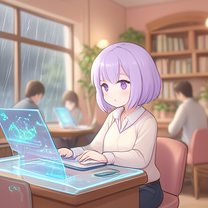
My German Journey: Navigating Digital Learning – It’s Not Always Smooth!
Okay, deep breath. Moving to Berlin was the biggest thing I’ve ever done. And learning German? Let’s just say it’s been… an adventure. I’m not fluent by any stretch of the imagination, but I’m talking German, which is a massive win. And a huge part of that has been trying to understand and navigate the different ways people are learning, especially with digital resources. It’s honestly been a fascinating, and sometimes frustrating, experience.
The First Class: Online German for Beginners
My first formal class was through a small, local Volkshochschule (adult education center). They offered a basic German course, and the first few weeks were entirely online. The teacher, Frau Schmidt, was lovely, but the platform… well, it was a mess.
We used this thing called “Moodle,” which sounded so official and sophisticated. I kept getting lost in the menus, trying to download handouts, and honestly, just feeling overwhelmed. My German was so basic; I couldn’t even figure out how to submit an assignment properly!
I remember getting an email from Frau Schmidt after the first session: “Hallo [My Name], ich habe gesehen, dass du das Aufgabenblatt nicht hochgeladen hast. Bitte lade es in das Moodle-Forum hoch. Es ist wichtig, dass du regelmäßig Aufgaben erledigst!” (Hello [My Name], I saw you didn’t upload the homework. Please upload it to the Moodle forum. It’s important that you complete tasks regularly!). I nearly panicked. It felt like a huge failure, but I understood what she said, thankfully. I learned pretty quickly that “hochladen” means to upload!
Digital Resources: A Mixed Bag
Outside of class, I’ve been trying out different apps and websites. Duolingo is good for building a base vocabulary – I’ve probably spent a ridiculous amount of time perfecting my ability to say “Ich habe Hunger” (I’m hungry) – but it doesn’t really teach you how to hold a conversation.
I also found this website, “Deutsche Welle” (DW Learn German), which is fantastic. They have courses from A1 to C1, and the videos are really helpful. I was watching a video about ordering coffee when I heard someone say “Die Kaffeemaschine ist kaputt!” (The coffee machine is broken!). It just felt so… real. It wasn’t a textbook example; it was a normal conversation.
Misunderstandings and Corrections
One time, I was talking to my neighbour, Herr Müller, and I tried to say, “Ich möchte einen Kuchen kaufen.” (I would like to buy a cake.) I pronounced it completely wrong, of course. He looked at me with this very patient expression and corrected me: “Nein, nein! Sagst du ‘Ich möchte einen Kuchen kaufen.’ Der Unterschied ist wichtig!” (No, no! Say, ‘I would like to buy a cake.’ The difference is important!). It’s little moments like that that really drive home the importance of listening carefully and not just relying on my rusty school German.
Another funny incident happened on a language exchange app. I was trying to explain I was having trouble finding a specific type of shoe and someone responded with a very technical German phrase – “Ein Schuhe mit wasserdichter Membran” (A shoe with a waterproof membrane) – which completely went over my head. I quickly realized I needed to adjust my vocabulary to match theirs!
Digital Learning Environments – What Works?
I think the most effective digital learning tools are those that mimic real-life conversations. The DW Learn German videos are great for this. Also, the interactive exercises – the ones that let you actually speak the German, even if it’s just to yourself – are incredibly valuable.
And honestly, having a digital forum or chat group to practice with is invaluable. Even if it’s just a small group of fellow learners, it gives me a chance to hear different accents and learn how people actually talk. I’m slowly getting used to the idea of making mistakes – Frau Schmidt keeps telling me it’s okay to “Fehler machen” (make mistakes!) – and that’s a huge relief.
My Next Steps
Right now, I’m focusing on improving my listening skills. I’m trying to find German podcasts and YouTube channels – there’s a huge amount of content out there! I’m also planning on joining a virtual conversation group. It’s terrifying, but I know it’s the best way to really put my German to the test.
Learning German is hard, no doubt about it. But with all these digital tools – and a healthy dose of patience (and a willingness to say “Ich weiß nicht” – I don’t know – a lot!), – I’m slowly, but surely, getting there. “Weiter so!” (Keep going!)
—
Do you want me to expand on a specific aspect of this article, or perhaps focus on a different scenario, like using a specific app or a particular cultural difference related to learning?

Leave a Reply